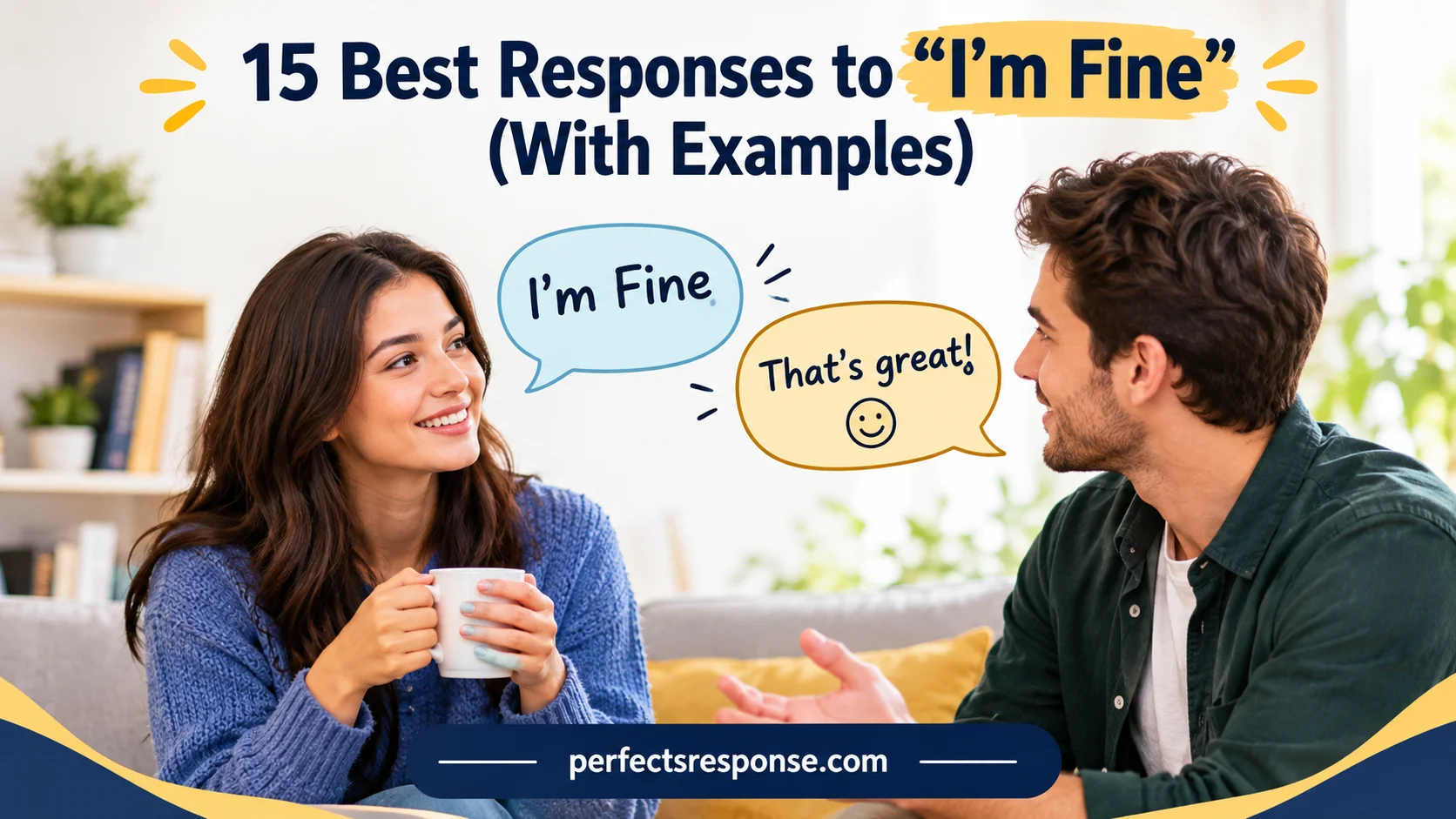
Best Responses to “I’m Fine” (With Examples) can help you find the right words when someone says they are fine. Whether you are talking to a friend, family member, colleague, or crush, choosing the right reply can make your conversation more natural. Sometimes, a person may genuinely feel good, while other times, they might be hiding their feelings. Learning different responses to “I’m fine” helps you express care, improve your English, and keep everyday conversations comfortable and engaging.
The best reply depends on the situation, your relationship, and the tone of the conversation. You can use a caring response to show support, a funny reply to make a friend smile, or a casual answer to keep things simple. In professional settings, a polite and respectful response may be more appropriate. This guide shares practical examples for texting, chatting with friends, talking to your crush, and handling serious moments so you can respond with confidence and keep the conversation going naturally.
1. “I’m Glad to Hear That!”
When someone says, “I’m fine,” responding with “I’m glad to hear that!” is a simple way to acknowledge their answer positively. Imagine your friend has been dealing with a busy week, and you check in to see how they’re feeling. They tell you they’re fine, and you respond with this cheerful phrase. It shows that you care about their well-being without turning a casual conversation into a serious discussion. However, if their voice sounds sad or their expression suggests something is wrong, you can gently ask whether they’re sure. This response works particularly well when you want to keep things light, friendly, and comfortable.
Meaning
The phrase means you’re happy to hear that the person is doing well. It acknowledges their answer positively.
Tone
Friendly, warm, and positive. It communicates happiness without sounding overly emotional.
Best Use
Use it with friends, family members, classmates, or coworkers when their answer seems genuine.
When to Use This Response
Choose this response when you want to acknowledge someone’s well-being and move the conversation forward naturally.
More Example Replies
- “That’s good to hear! I hope your day keeps getting better.”
- “I’m happy you’re doing okay.”
- “Great! I was hoping everything was going well.”
Similar Responses
- “That’s good to hear!” — Casual and natural.
- “I’m happy to hear that.” — Slightly more heartfelt.
- “Glad you’re doing okay.” — Relaxed and friendly.
2. “Are You Sure? I’m Here If You Need Me.”
Sometimes, “I’m fine” sounds different from an ordinary answer. Perhaps your best friend has been unusually quiet, or your partner seems upset after a difficult day. In these situations, “Are you sure? I’m here if you need me” lets the person know you’ve noticed something without accusing them of hiding their feelings. For example, if your sister has had an argument with a friend, she might say she’s fine because she isn’t ready to explain what happened. Your response offers support without demanding an explanation. The most important part is following through on your offer and giving the person space to talk whenever they feel comfortable.
Meaning
This phrase gently checks whether someone is genuinely okay and reminds them that your support is available.
Tone
Caring, empathetic, and reassuring. It communicates concern without insisting that something must be wrong.
Best Use
Use it with close friends, family members, or romantic partners when their behavior suggests they may be struggling.
When to Use This Response
Choose this reply when you want to open the door to a deeper conversation while respecting the person’s choice to remain quiet.
More Example Replies
- “You seem a little down today. Want to talk about it?”
- “No pressure to explain, but I’m always here for you.”
- “If something’s bothering you, you don’t have to handle it alone.”
Similar Responses
- “Want to talk about it?” — Invites a conversation directly.
- “I’m here whenever you’re ready.” — Gives the person more space.
- “You can talk to me if you want.” — Offers gentle reassurance.
3. “That’s Good, but How Are You Really?”
A person may say “I’m fine” because they don’t want to worry anyone, feel uncomfortable discussing emotions, or simply need more time to understand how they feel. If you’re close to them and notice signs of distress, “That’s good, but how are you really?” can encourage a more honest conversation. Imagine your partner comes home after a stressful day and answers your question with a quick “I’m fine” before walking away. Instead of immediately asking what happened, you can gently check in again. Your tone matters here. Ask with warmth rather than suspicion, and accept their answer if they aren’t ready to share more.
Meaning
This response asks whether the person’s first answer reflects their actual feelings or whether they might want to share something deeper.
Tone
Concerned, sincere, and emotionally attentive. Depending on delivery, it can feel caring or intrusive.
Best Use
It’s best for close relationships where checking in emotionally feels natural and welcome.
When to Use This Response
Use it when someone seems noticeably upset and you have a trusting relationship. Avoid repeatedly questioning an acquaintance or coworker who has indicated that they’re fine.
More Example Replies
- “I’m glad you’re okay. Is there anything on your mind?”
- “You don’t seem like yourself today. Everything all right?”
- “I just want to make sure you’re genuinely doing okay.”
Similar Responses
- “How are you holding up?” — Particularly helpful during difficult times.
- “How have you really been feeling?” — Encourages a more thoughtful answer.
- “Is everything okay with you?” — A softer, more general check-in.
4. “I’m Here If You Want to Talk.”
Not everyone feels comfortable talking about their problems immediately. Sometimes people need time to process their emotions before they can explain what’s happening. When someone says, “I’m fine,” “I’m here if you want to talk” offers a comfortable alternative to asking more questions. Imagine a coworker has been dealing with personal difficulties but doesn’t want to discuss them during the workday. You can express your support without asking for private details. The same approach works with a friend who seems distracted or a family member who’s unusually quiet. It reminds them that they aren’t alone while allowing them to decide whether, when, and how much to share.
Meaning
The phrase communicates that you’re willing to listen if the person wants to discuss their feelings or problems.
Tone
Supportive, respectful, and reassuring. It places the person’s comfort ahead of your curiosity.
Best Use
Use it with friends, relatives, partners, or trusted colleagues who might appreciate emotional support.
When to Use This Response
Choose it when you suspect someone is having a difficult time but don’t want to pressure them into explaining themselves.
More Example Replies
- “Whenever you’re ready to talk, I’ll listen.”
- “You don’t have to explain anything right now. I’m here.”
- “If you need someone to listen, you can count on me.”
Similar Responses
- “I’m always happy to listen.” — Highlights your willingness to hear them out.
- “Take your time.” — Emphasizes patience.
- “You don’t have to go through this alone.” — Offers stronger emotional reassurance.
5. “Okay, but Don’t Forget You Can Count on Me.”
Sometimes the best response isn’t another question. It’s a reminder that someone has support, even when they aren’t ready to ask for it. “Okay, but don’t forget you can count on me” works well when a person insists they’re fine but appears to be managing a lot. For example, your brother might be balancing work responsibilities, family commitments, and personal stress. When you ask how he’s doing, he gives a brief answer and changes the subject. Rather than forcing him to explain, you can acknowledge his answer and remind him that you’re available. This response is especially meaningful when your actions match your words and you can offer practical help when needed.
Meaning
It means you respect the person’s answer while reminding them that they can rely on you for support.
Tone
Loyal, caring, and reassuring. It emphasizes trust rather than demanding emotional openness.
Best Use
Use it with close friends, siblings, partners, or other people who know they can depend on you.
When to Use This Response
Choose it when someone seems overwhelmed but doesn’t want to discuss their feelings. It is also useful when practical assistance may be more helpful than questions.
More Example Replies
- “All right. Just remember I’m only a call away.”
- “I understand. Let me know if there’s anything I can do.”
- “You can always reach out to me, even on a difficult day.”
Similar Responses
- “I’ve got your back.” — Casual and loyal.
- “You can lean on me.” — Warm and emotionally supportive.
- “Let me know how I can help.” — Focuses on practical assistance.
6. “That’s a Relief!”
When someone tells you they’re fine after a worrying situation, “That’s a relief!” is a natural way to express how happy you are that things turned out okay. Imagine your friend has been traveling during bad weather, and you’ve been waiting to hear that they arrived safely. When they finally message, “I’m fine,” you can respond with this phrase. It communicates genuine relief without making the conversation overly serious. You can also use it when a family member has finished a difficult appointment or a coworker confirms that a minor workplace problem has been resolved. The key is to use it when you’ve had a real reason to worry, rather than treating every ordinary answer as a dramatic event.
Meaning
It means you’re happy that the person is okay and that a potentially worrying situation has turned out well.
Tone
Relieved, warm, and appreciative. It expresses happiness that things are okay.
Best Use
Use it after a stressful event, an unexpected problem, a journey, or a situation where someone’s safety or well-being concerned you.
When to Use This Response
Choose this phrase when the person has just reassured you after you’ve been worried about them. It works particularly well when the context explains your relief.
More Example Replies
- “Oh, good! I was worried after hearing about the accident.”
- “I’m so glad everything worked out.”
- “That’s wonderful. I’ve been hoping you’d be okay.”
Similar Responses
- “What a relief!” — Expresses a similar feeling with slightly more emphasis.
- “I’m glad you’re okay.” — Focuses directly on the person.
- “Thank goodness!” — More emotional and informal.
7. “You Don’t Have to Pretend to Be Okay With Me.”
Sometimes, people say “I’m fine” because they feel they must appear strong, even when they’re struggling. If someone you love seems emotionally exhausted, “You don’t have to pretend to be okay with me” can reassure them that honesty is welcome. Imagine your partner has had a disappointing day but keeps smiling because they don’t want to burden you. Instead of criticizing them for hiding their feelings, you can gently remind them that they don’t need to put on a brave face around you. This phrase is best used when there’s already trust between you. Give them room to respond in their own time, and remember that not everyone wants to discuss difficult emotions immediately.
Meaning
It tells someone they can express their real feelings around you without feeling obligated to appear happy or strong.
Tone
Deeply empathetic, intimate, and reassuring. It communicates emotional safety and acceptance.
Best Use
Use it with a trusted friend, romantic partner, or family member who may feel pressure to hide their emotions.
When to Use This Response
Choose it when someone appears to be masking sadness or stress and you have a close enough relationship to offer this kind of emotional reassurance. Avoid assuming you know their feelings better than they do.
More Example Replies
- “You can be honest with me, even when things are difficult.”
- “It’s okay if today hasn’t been a good day.”
- “You don’t need to put on a brave face around me.”
Similar Responses
- “It’s okay not to be okay.” — Normalizes difficult emotions.
- “You can be yourself around me.” — Emphasizes acceptance.
- “I’m not going to judge you.” — Reassures someone who fears criticism.
8. “Good to Know! What’s Been Going on Today?”
Not every response to “I’m fine” needs to explore someone’s emotions. Sometimes, a simple follow-up about their day keeps a conversation moving without making it feel like an interview. “Good to know! What’s been going on today?” works especially well when you want to show interest in the person’s life. For instance, you might text a friend after a few days without speaking. They reply that they’re fine, and you ask about their day to give them an easy way to continue chatting. They can share something exciting, complain about a busy schedule, or simply talk about ordinary things. This approach feels natural because it invites conversation without suggesting that their first answer must be hiding something.
Meaning
It acknowledges that the person is doing fine and invites them to share more about their day.
Tone
Casual, friendly, and interested. It keeps the interaction light and conversational.
Best Use
Use it with friends, classmates, relatives, and acquaintances when you want to continue a pleasant conversation.
When to Use This Response
Choose it when there are no clear signs of distress and you simply want to learn more about what’s happening in the person’s life.
More Example Replies
- “Glad to hear it! Have you done anything interesting today?”
- “Nice! How has your week been so far?”
- “That’s good. Anything exciting happening lately?”
Similar Responses
- “How’s your day going?” — Simple and broadly useful.
- “What have you been up to?” — Relaxed and conversational.
- “Anything new with you?” — A good way to reconnect.
9. “Just Fine? Nothing Amazing Happening?”
If you share a playful relationship with someone, a little humor can turn a basic exchange into a more enjoyable conversation. “Just fine? Nothing amazing happening?” gently encourages the person to share more without making the interaction too serious. Imagine a friend messages you after a busy week and responds with a short “I’m fine.” You might use this reply to tease them affectionately and invite them to tell you about something interesting. The phrase works best when both people understand each other’s humor. If the person sounds upset, however, joking may make them feel misunderstood. Pay attention to their mood and be ready to switch to a more supportive response if the conversation takes a serious turn.
Meaning
It playfully asks whether the person has anything more interesting or exciting to share.
Tone
Playful, curious, and lightly teasing. It adds energy to an otherwise ordinary conversation.
Best Use
Use it with friends, siblings, or people who enjoy relaxed banter and comfortable teasing.
When to Use This Response
Choose it when the person seems cheerful but gives a brief answer. Avoid using it when they appear distressed or clearly want a quiet moment.
More Example Replies
- “Only fine? I was hoping for an exciting update!”
- “Fine is good, but give me the interesting version.”
- “All right, now tell me one good thing about your day.”
Similar Responses
- “Anything exciting happening?” — Friendly and curious.
- “Give me the full update!” — Energetic and informal.
- “What’s the highlight of your day?” — Encourages a more specific answer.
Read More: 15 Best Responses to “Greetings to You” (With Examples)
10. “I’m Happy You’re Okay. Want to Hang Out?”
Sometimes, spending time together is more helpful than talking about feelings. “I’m happy you’re okay. Want to hang out?” acknowledges the person’s response while offering a practical way to connect. For example, your friend might have been unusually quiet lately but insists they’re fine when you ask. Rather than asking several more questions, you could invite them for coffee, a walk, or a relaxed evening at home. They may welcome the company without wanting to explain what’s been happening. Even if nothing is wrong, the invitation gives you both a chance to reconnect. Make sure the invitation feels optional, though. If they decline, respect their decision instead of treating it as evidence that they’re hiding something.
Meaning
It expresses happiness that the person is okay and suggests spending time together.
Tone
Warm, friendly, and inviting. It offers companionship without requiring a serious conversation.
Best Use
Use it with friends, family members, or romantic partners who appreciate spending time together.
When to Use This Response
Choose it when you want to reconnect, offer company, or create a comfortable opportunity for conversation.
More Example Replies
- “Glad you’re doing okay. Want to grab some coffee later?”
- “That’s good to hear. How about a walk this evening?”
- “I’m happy you’re fine. Fancy watching a movie together?”
Similar Responses
- “Want some company?” — Gentle and low-pressure.
- “Let’s catch up soon.” — Useful when you’re both busy.
- “Are you free to hang out later?” — Direct and practical.
11. “If You Say So, But I’m Always Listening.”
Sometimes you can sense that a person isn’t ready to discuss something, even when you suspect they may be struggling. “If you say so, but I’m always listening” acknowledges their answer while gently reminding them that they can speak openly with you. Imagine a close friend who has been unusually distant. You ask whether everything is okay, and they reply, “I’m fine.” Rather than continuing to question them, you can leave the conversation open. The phrase should sound gentle, not sarcastic or doubtful. When delivered warmly, it allows the person to maintain their privacy while knowing that support is available. Respecting their answer is just as important as noticing their behavior.
Meaning
It means you accept the person’s answer for now while remaining available if they want to share more.
Tone
Patient, understanding, and quietly supportive. The wording can sound skeptical if delivered with the wrong emphasis.
Best Use
Use it with people you know well, especially when they seem reluctant to discuss a difficult subject.
When to Use This Response
Choose it when you want to acknowledge possible discomfort without pressing for an explanation. If the person clearly confirms that they’re fine, avoid repeatedly challenging their answer.
More Example Replies
- “Okay, I won’t push. You know where to find me.”
- “I understand. If you need to talk later, I’m here.”
- “All right. Just know that I’ll listen whenever you need me to.”
Similar Responses
- “I’ll leave it up to you.” — Emphasizes personal choice.
- “I’m here whenever you need me.” — Offers steady support.
- “You can tell me when you’re ready.” — Focuses on timing.
12. “That’s Good. Is There Anything I Can Help With?”
A person can genuinely be fine while still having a lot on their plate. In that situation, offering practical assistance may be more useful than asking about their emotions. “That’s good. Is there anything I can help with?” combines a positive acknowledgment with an offer of support. Imagine a coworker tells you they’re fine while juggling several deadlines. You could offer to review a document or help organize a task. Similarly, a family member may appreciate help with errands, even if they don’t want to discuss personal matters. The phrase works best when you can follow through on your offer. Rather than promising to solve everything, offer help that fits your time, abilities, and relationship.
Meaning
It acknowledges the person’s answer and asks whether they need any practical assistance.
Tone
Helpful, considerate, and respectful. It communicates willingness to support the person without assuming they need rescuing.
Best Use
Use it with coworkers, friends, family members, or anyone facing a task that you could reasonably help with.
When to Use This Response
Choose it when you notice that someone might benefit from practical help or when you want to offer assistance without making personal questions the focus.
More Example Replies
- “Glad you’re doing okay. Would it help if I took care of that errand?”
- “No problem. Let me know if you need an extra hand.”
- “I’m happy to help if there’s anything making your day harder.”
Similar Responses
- “Need a hand with anything?” — Casual and direct.
- “How can I make things easier?” — Focuses on reducing someone’s workload.
- “Is there anything you need?” — Broad and considerate.
13. “Good! Let’s Keep It That Way.”
If you want a cheerful, slightly humorous response, “Good! Let’s keep it that way” can add a little personality to an everyday conversation. Imagine a friend tells you they’re fine before you both head out for a fun afternoon. You might respond with this phrase to express optimism and keep the mood positive. It can also work in lighthearted exchanges with a partner or sibling. The key is context: this response isn’t intended to explore deeper emotions or offer serious reassurance. It’s better suited to situations where the person genuinely seems okay. If they sound exhausted or upset, choose a more empathetic reply instead. Humor is most effective when it fits the mood rather than distracting from someone’s feelings.
Meaning
It means you’re glad the person is doing well and hope things continue positively.
Tone
Cheerful, playful, and optimistic. It can sound affectionate when used with someone you know well.
Best Use
Use it in casual conversations with friends, partners, siblings, or other people who enjoy lighthearted exchanges.
When to Use This Response
Choose it when the person seems genuinely fine and you want to keep the conversation upbeat. Avoid it when they may need comfort or serious attention.
More Example Replies
- “Perfect! Here’s hoping the rest of your day goes smoothly.”
- “Great! Let’s make today even better.”
- “Love that. Let’s keep the good vibes going.”
Similar Responses
- “Glad to hear it! Keep smiling.” — Cheerful and encouraging.
- “Here’s to a good day!” — Optimistic and upbeat.
- “That’s the spirit!” — Energetic and supportive.
14. “I’m Glad You’re Doing Okay, Sweetheart.”
When someone you love says “I’m fine,” a gentle, affectionate reply can make the exchange feel more personal. “I’m glad you’re doing okay, sweetheart” works well when you want to show warmth without demanding a detailed explanation. Imagine your partner has had a long day and answers your message with a short reassurance. You can respond affectionately and let them decide whether they want to continue talking. This phrase can also suit a parent speaking to a child or another close family relationship, depending on how you normally address each other. Terms of endearment are personal, so use them only when they feel natural. The goal is to communicate care, not to make the other person uncomfortable.
Meaning
It expresses happiness that someone is okay while adding an affectionate term that signals closeness.
Tone
Tender, loving, and reassuring. Depending on the relationship, it may sound romantic or familial.
Best Use
Use it with a romantic partner or close family member who is comfortable with affectionate language.
When to Use This Response
Choose it when you want to reassure someone that their well-being matters to you. If their answer seems uncertain, you can add a gentle invitation to talk later.
More Example Replies
- “I’m glad you’re okay, love. I’m thinking of you.”
- “That’s good to hear, darling. Take care of yourself.”
- “Happy you’re doing all right, sweetheart. I’m here if you need me.”
Similar Responses
- “I’m glad you’re okay, love.” — Warm and romantic.
- “Take care, dear.” — Gentle and caring.
- “I’m thinking of you.” — Affectionate without requiring a response.
15. “Okay, I Trust You. Just Take Care of Yourself.”
Sometimes, the most thoughtful response to “I’m fine” is to accept what the person says. “Okay, I trust you. Just take care of yourself” communicates that you respect their answer while reminding them that their well-being matters. Imagine a friend who prefers to handle personal challenges privately. You ask how they’re doing, they tell you they’re fine, and you decide not to push for more details. This response shows that you care without suggesting that they owe you an explanation. It’s particularly useful in relationships where both people value independence. Trust doesn’t mean ignoring someone who asks for help; it means respecting their words while remaining approachable if their needs change.
Meaning
It accepts the person’s reassurance and encourages them to look after themselves.
Tone
Respectful, caring, and reassuring. It balances concern with trust and personal boundaries.
Best Use
Use it with independent friends, family members, romantic partners, or acquaintances who prefer to manage their feelings privately.
When to Use This Response
Choose it when you want to end a check-in on a supportive note without extending the conversation unnecessarily.
More Example Replies
- “All right, I believe you. Don’t forget to rest.”
- “Okay, take good care of yourself, and message me if you need anything.”
- “I’m glad you’re okay. Remember to look after yourself, too.”
Similar Responses
- “I trust you. Take care.” — Direct and respectful.
- “All right, I’m here if anything changes.” — Leaves the door open.
- “Take it easy, okay?” — Casual and caring.
FAQs:
1. What is the best response to “I’m fine”?
The best response to “I’m fine” is “Glad to hear that!” It sounds friendly and natural. If you think the person may be hiding their feelings, you can say, “I’m here if you need to talk.”
2. How do you respond to “I’m fine” when someone seems sad?
You can respond with kindness by saying, “Are you sure? I’m here for you if anything is bothering you.” This shows that you care without pressuring the person to share their feelings.
3. What is a funny response to “I’m fine”?
A funny response could be, “Just fine? Not amazing?” or “Fine is good, but fabulous is better!” Use playful replies when you know the person enjoys humor and feels comfortable joking with you.
4. How do you reply to “I’m fine” over text?
You can text, “That’s good to hear!” or “Okay, just let me know if you need anything.” If you want to continue the conversation, ask, “So, how has your day been?”
5. How do you respond to “I’m fine” professionally?
In a professional setting, you can say, “Glad to hear that. I hope your day is going well.” This response is polite, respectful, and suitable for colleagues, clients, and workplace conversations.
Conclusion:
Knowing the best responses to “I’m fine” can help you communicate more naturally in everyday conversations. Whether you choose a friendly, funny, caring, or professional reply, the key is to consider the situation and your relationship with the other person. Sometimes, a simple response is enough, while other moments call for extra kindness and support. Use these examples to improve your English, build confidence, and keep conversations flowing naturally. Most importantly, listen carefully and show genuine interest when someone shares how they feel.

Adam West is an English-language writer with a passion for storytelling, culture, and everyday life. His writing focuses on clear ideas, engaging narratives, and thoughtful perspectives that are easy for readers to connect with.










1 thought on “15 Best Responses to “I’m Fine” (With Examples)”