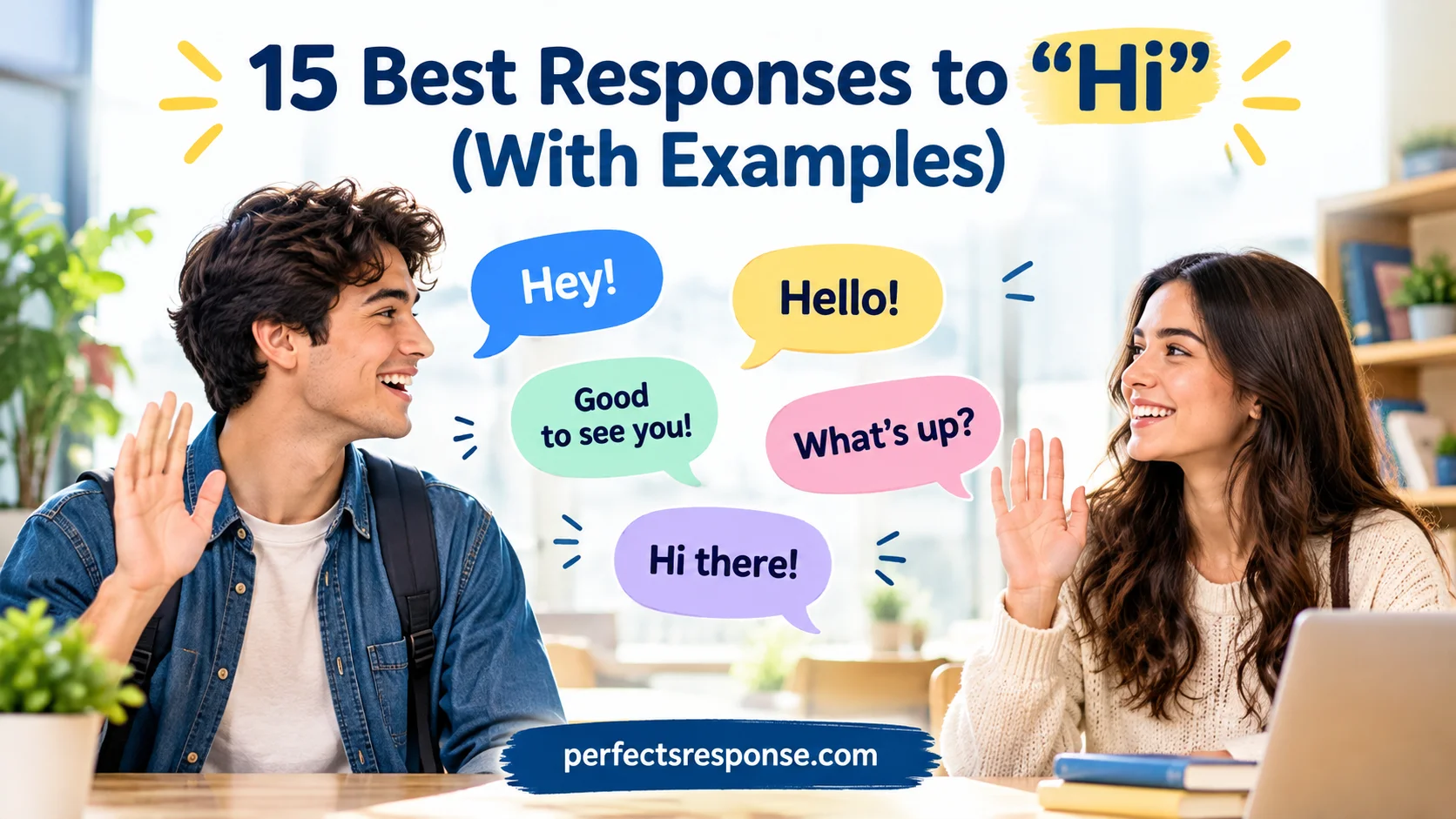
Best Responses to “Hi” (With Examples) can help you find the right words to start a conversation confidently. Whether someone texts you casually or tries to get your attention, a thoughtful reply can make the interaction more interesting and natural. From friendly greetings to funny comebacks and flirty messages, choosing the right response depends on your relationship with the person and the tone you want to set.
A simple “Hi” may seem like an ordinary greeting, but your answer can open the door to a meaningful conversation. You might be texting a friend, crush, coworker, or someone new, and each situation calls for a different approach. In this guide, you’ll discover practical examples of replies to “Hi” that sound natural, keep conversations flowing, and help you express your personality. Whether you prefer a casual, playful, professional, or flirty response, you’ll find an option that suits your situation.
1. “Hey! How Are You?”
When someone sends you a simple “Hi,” replying with “Hey! How are you?” is one of the easiest ways to keep the conversation going. Imagine a friend messaging you after a busy week. Instead of responding with just another greeting, you invite them to share what’s happening in their life. This response works equally well with classmates, coworkers you know well, relatives, and new acquaintances. It shows that you’re open to talking without making the conversation feel too serious. You can also personalize it by mentioning something relevant, such as an exam, a recent trip, or a new job. If you’re looking for a friendly response to “Hi,” this phrase offers a natural starting point.
Meaning
It means you’re greeting the person and asking about their well-being. It shows interest in continuing the conversation.
Tone
Friendly, polite, and welcoming. It sounds approachable without being overly familiar.
Best Use
Use it with friends, acquaintances, classmates, or someone you would like to know better.
When to Use This Response
Choose this reply when you want to move beyond a basic greeting and encourage the other person to talk about themselves.
More Example Replies
- “Hey! How’s your day going?”
- “Hi there! How have you been?”
- “Hey! Everything going well?”
Similar Responses
- “Hi! What’s up?” — More casual and relaxed.
- “Hey! How’s life?” — Friendly and slightly broader.
- “Hello! How are things?” — A little more polished.
2. “Hey! What’s Up?”
“Hey! What’s up?” is a relaxed reply that works especially well when you don’t want to overthink your message. Picture a friend sending “Hi” while you’re relaxing at home. You can answer with this phrase to show you’re available to chat. It’s also useful when messaging someone you already know, whether you’re discussing weekend plans, sharing funny videos, or simply catching up. The question gives the other person an easy way to introduce a topic. They might tell you what they’re doing, ask what you’re up to, or bring up something you’ve discussed before. Although this phrase is common in casual conversation, it may sound too informal in a message to a senior manager or an unfamiliar professional contact.
Meaning
It means “What’s happening?” or “What are you doing?” It invites the other person to share what’s going on.
Tone
Casual, friendly, and laid-back. It sounds natural in informal conversations.
Best Use
Use it with friends, siblings, classmates, and people you regularly message.
When to Use This Response
Choose it when you want an easygoing conversation and don’t have a specific question in mind.
More Example Replies
- “Hey! What are you up to?”
- “Hi! Anything interesting happening?”
- “Hey, what’s going on?”
Similar Responses
- “What’s happening?” — Casual and straightforward.
- “What are you doing?” — More focused on the person’s current activity.
- “How’s it going?” — A friendly check-in.
3. “Hi! Nice to Hear From You.”
Sometimes, a greeting comes from someone you haven’t spoken to in weeks or months. In that situation, “Hi! Nice to hear from you” can make the person feel welcome. Imagine an old school friend contacting you unexpectedly. You may be pleasantly surprised and genuinely interested in reconnecting. This response expresses that feeling without making the conversation too emotional or complicated. It also works when a former coworker, distant relative, or previous classmate reaches out. You can make it more personal by adding a question about something you remember from your last conversation. If you want to reply to “Hi” warmly while encouraging a meaningful exchange, this phrase communicates appreciation and openness.
Meaning
It means you’re glad the person contacted you and would welcome a conversation.
Tone
Warm, sincere, and welcoming. It communicates appreciation without being overly sentimental.
Best Use
Use it when reconnecting with an old friend, former colleague, relative, or someone you haven’t spoken to recently.
When to Use This Response
Choose it when the greeting feels unexpected or when you want the person to know you’re happy they reached out.
More Example Replies
- “Hi! It’s lovely to hear from you again.”
- “Hey! I’m glad you messaged.”
- “Hello! It’s been a while. How have you been?”
Similar Responses
- “So good to hear from you!” — More enthusiastic.
- “I’m glad you reached out.” — More personal and appreciative.
- “It’s been ages! How are you?” — Casual and nostalgic.
4. “Hi There! How’s Your Day Going?”
If you want a response that feels a little more thoughtful than a basic greeting, try “Hi there! How’s your day going?” Imagine messaging a friend during their lunch break or replying to someone who contacts you in the afternoon. The question gives them room to talk about something positive, complain about a difficult day, or share an interesting experience. It can also help when you’re getting to know someone because it opens the conversation without asking anything too personal. Unlike “What’s up?”, this response encourages the person to reflect on how their day has been. You can keep the exchange going by responding to their answer instead of immediately changing the subject.
Meaning
It means you’re greeting someone and asking how their day has been so far.
Tone
Considerate, friendly, and conversational. It suggests that you’re interested in the person’s experience.
Best Use
Use it with friends, acquaintances, classmates, or someone you’re getting to know.
When to Use This Response
Choose it when you want to begin a conversation with a specific but easy question.
More Example Replies
- “Hey! How’s your afternoon going?”
- “Hi! Has your day been good so far?”
- “Hello! How’s everything going today?”
Similar Responses
- “How’s your day been?” — Works well later in the day.
- “How are things today?” — Slightly broader.
- “Hope you’re having a good day!” — Warm, but doesn’t directly ask a question.
5. “Hey! It’s Great to See Your Message.”
A message from someone you enjoy talking to can brighten your day. “Hey! It’s great to see your message” lets the person know you’re pleased to hear from them. For example, imagine a friend who usually has a busy schedule finally gets in touch. Rather than replying with a plain “Hi,” you can use this phrase to show enthusiasm. It also works when someone you admire or appreciate starts a conversation, provided your relationship makes the warmth appropriate. In a text-based conversation, “see your message” is more natural than “see you,” because you haven’t necessarily met in person. Keep the expression genuine and avoid using it if you don’t actually feel enthusiastic about the contact.
Meaning
It means you’re happy to receive the person’s message and are interested in talking.
Tone
Positive, warm, and appreciative. It expresses more enthusiasm than a neutral greeting.
Best Use
Use it with close friends, favorite relatives, or someone whose messages you genuinely enjoy receiving.
When to Use This Response
Choose it when you want to make the other person feel appreciated without making a simple greeting sound romantic.
More Example Replies
- “Hey! I’m happy you messaged.”
- “Hi! Your message made me smile.”
- “Hey! Always nice to hear from you.”
Similar Responses
- “Glad you reached out!” — Appreciative and natural.
- “Lovely to hear from you!” — Warm and slightly polished.
- “Hey! What a nice surprise!” — Best for unexpected messages.
6. “Hey You! What’s Going On?”
If you already share a comfortable relationship with someone, “Hey you! What’s going on?” can make your reply feel more personal. Imagine your best friend texting you while you’re both taking a break from work or studying. This greeting adds a little familiarity to an ordinary exchange. Depending on your relationship, it can sound playful, affectionate, or simply relaxed. It can also work with someone you’re dating if this style matches the way you normally communicate. However, avoid using “Hey you” with someone you barely know if it might sound too familiar. The best responses to “Hi” reflect the connection you already have rather than trying to create instant closeness.
Meaning
It is an informal greeting that asks what the person is doing or what has been happening in their life.
Tone
Playful, familiar, and friendly. It can feel affectionate when used with someone close to you.
Best Use
Use it with close friends, siblings, partners, or people who appreciate relaxed conversation.
When to Use This Response
Choose it when you want to sound comfortable and familiar rather than formal or distant.
More Example Replies
- “Hey you! How have you been?”
- “Well, hello! What’s new?”
- “Hey, stranger! What have you been up to?”
Similar Responses
- “Hey, stranger!” — Best for someone you haven’t seen or spoken to in a while.
- “Well, hello!” — Playful and expressive.
- “Hey, buddy!” — Friendly, with a more platonic feel.
7. “Hi! What Have You Been Up To?”
When someone you haven’t talked to recently sends “Hi,” asking “What have you been up to?” is an easy way to reconnect. You might use it when a former classmate messages you after graduation or when a cousin contacts you after a busy few months. Rather than focusing only on the greeting, you invite the person to share updates about work, hobbies, travel, or family life. This question also gives you plenty of opportunities to find common ground. If they mention a new project or personal achievement, ask a follow-up question to show interest. The phrase is particularly useful when you want to restart a conversation without drawing attention to why you’ve been out of touch.
Meaning
It asks what someone has been doing or experiencing since you last talked.
Tone
Curious, friendly, and conversational. It encourages the person to share recent updates.
Best Use
Use it with old friends, former classmates, distant relatives, and acquaintances you haven’t contacted recently.
When to Use This Response
Choose it when you want to catch up rather than make small talk about the current moment.
More Example Replies
- “Hey! Anything new in your life?”
- “Hi! How have things been lately?”
- “Hey! Any exciting updates?”
Similar Responses
- “How have you been?” — More focused on overall well-being.
- “What’s new with you?” — Shorter and casual.
- “Tell me what’s been happening!” — More enthusiastic and inviting.
8. “Hi! 😊”
Sometimes, the best response is simple. “Hi! 😊” returns the greeting while adding a friendly facial expression. Imagine receiving a message from a new classmate or someone you have recently started chatting with. You may want to sound approachable without asking personal questions or making assumptions about their intentions. A smile emoji can soften the message and make it feel less abrupt. This reply is especially helpful when you aren’t sure what the other person wants to discuss. You can wait for their next message or add a question if you’d like to encourage conversation. Remember that emojis can be interpreted differently, so choose one that suits your usual messaging style and the relationship.
Meaning
It means you’re returning the greeting in a friendly way, with the emoji adding warmth.
Tone
Cheerful, gentle, and approachable. The message feels a little warmer than a plain “Hi.”
Best Use
Use it in casual chats, friendly introductions, and conversations where a short response feels appropriate.
When to Use This Response
Choose it when you want to acknowledge the message without immediately starting a detailed conversation.
More Example Replies
- “Hey! 😊”
- “Hi there! 🙂”
- “Hello! 👋”
Similar Responses
- “Hey! 👋” — Friendly and energetic.
- “Hi there!” — Warm without an emoji.
- “Hello 😊” — Slightly more neutral.
9. “Hey! You Just Made Me Smile.”
If the person messaging you is someone special, “Hey! You just made me smile” can be a sweet way to respond. Picture someone you’re dating sending a quick greeting while you’re having a stressful day. This reply lets them know their message had a positive effect on you. It can also work with a close friend whose messages always cheer you up. The phrase carries a little more emotion than a standard greeting, so consider how close you are before using it. With someone you’ve only just met, it could feel unexpectedly intimate. When the warmth is mutual, however, it creates an opportunity for a more personal conversation and helps you express appreciation without writing a long message.
Meaning
It tells the other person that receiving their message made you feel happy.
Tone
Affectionate, sincere, and potentially romantic. The meaning depends on your relationship.
Best Use
Use it with a romantic interest, partner, or close friend who appreciates heartfelt messages.
When to Use This Response
Choose it when you genuinely feel happy to hear from the person and want to express that feeling.
More Example Replies
- “Hey! It’s always nice hearing from you.”
- “Hi! Your timing is perfect. I needed a smile.”
- “Hey! This is a lovely surprise.”
Similar Responses
- “You made my day!” — More enthusiastic.
- “It’s always good to hear from you.” — Warm but less intimate.
- “A message from you is always welcome.” — Thoughtful and sincere.
Also Read This: 15 Best Responses to “How Are You” (With Examples)
10. “Hey! How Can I Help You?”
In a professional setting, a greeting may be the beginning of a question, request, or work-related discussion. “Hey! How can I help you?” acknowledges the person and invites them to explain what they need. Imagine receiving “Hi” from a colleague while you’re working on a project. This response is useful because it keeps the conversation focused and shows that you’re ready to assist. For a customer, manager, or unfamiliar business contact, you may prefer the more polished version, “Hello! How may I help you?” Context matters: if a friend sends you a greeting, this reply may sound unusually formal or suggest that you expect them to ask for a favor. Match the wording to the relationship and situation.
Meaning
It means you’re greeting the person and asking what assistance or information they need.
Tone
Helpful, professional, and courteous. It communicates readiness to assist.
Best Use
Use it in customer service, workplace chats, business conversations, or when someone contacts you about a task.
When to Use This Response
Choose it when you suspect the person has a practical question or when you want to keep a professional conversation efficient.
More Example Replies
- “Hello! What can I do for you today?”
- “Hi! How may I assist you?”
- “Hey! Let me know what you need.”
Similar Responses
- “How can I assist you?” — More formal.
- “What can I help with?” — Direct and conversational.
- “What do you need help with?” — Clear and practical.
11. “Hi! Long Time No See!”
When someone you haven’t spoken to in ages sends a greeting, “Hi! Long time no see!” is a cheerful way to acknowledge the gap. Imagine running into an old school friend online after years of separate routines, jobs, and experiences. This phrase recognizes that time has passed without making the situation uncomfortable. You can follow it with a question about their life or mention a shared memory to make the exchange more personal. It works especially well when you parted on good terms. If the relationship ended with conflict, however, a more neutral response may be wiser. The phrase is traditionally associated with meeting again, but people also use it informally in messages when reconnecting.
Meaning
It means you haven’t seen or spoken to someone for a long time and are happy to reconnect.
Tone
Casual, cheerful, and nostalgic. It acknowledges the time apart in a lighthearted way.
Best Use
Use it with old friends, former classmates, past coworkers, or relatives you haven’t seen recently.
When to Use This Response
Choose it when the gap in communication is noticeable and you want to restart things on a positive note.
More Example Replies
- “Hey! It’s been forever. How are you?”
- “Hi! Wow, it’s been a while!”
- “Hello! What a surprise hearing from you again.”
Similar Responses
- “It’s been ages!” — Casual and expressive.
- “How have you been?” — More focused on the person.
- “Great to reconnect!” — Slightly more polished.
12. “Hey! Guess Who’s Happy to Hear From You?”
A playful response can turn a basic greeting into a fun exchange when you already know the person well. “Hey! Guess who’s happy to hear from you?” adds a teasing touch while making your positive feelings clear. Imagine a close friend who likes joking around sending you a quick “Hi.” Instead of replying in a predictable way, you can use this phrase to invite a laugh. It may also suit a romantic partner if playful affection is part of your relationship. However, the wording can sound exaggerated or awkward with a stranger, so use it where the humor feels natural. You can make it even more personal by following it with an inside joke or a question about something you both enjoy.
Meaning
It playfully tells someone that you’re glad they contacted you, while inviting a lighthearted response.
Tone
Humorous, teasing, and affectionate. It works best when both people enjoy playful conversation.
Best Use
Use it with close friends, partners, or people who understand your sense of humor.
When to Use This Response
Choose it when you want to make the other person smile and express enthusiasm without sounding overly serious.
More Example Replies
- “Well, look who just improved my day!”
- “Hey! Someone’s favorite notification just arrived.”
- “Hi! I was wondering when you’d show up.”
Similar Responses
- “Look who it is!” — Short and playful.
- “There you are!” — Familiar and upbeat.
- “Well, this is a nice surprise!” — Warm with less teasing.
13. “Hello! It’s Nice to Meet You.”
When a person you don’t know sends “Hi,” a polite introduction can be the best next step. “Hello! It’s nice to meet you” is especially suitable when someone introduces themselves in a professional group, an online community, or a new social setting. For example, a new teammate may message you before your first project meeting. This response acknowledges their greeting and establishes a respectful tone. If you’ve already met in person, use “It’s nice to hear from you” instead, because “nice to meet you” generally refers to meeting someone for the first time. You can also add a brief question about their role or interests to keep the conversation moving without making it feel like an interview.
Meaning
It expresses pleasure at making someone’s acquaintance, usually for the first time.
Tone
Polite, welcoming, and respectful. It suits introductions and unfamiliar contacts.
Best Use
Use it with new colleagues, online acquaintances, group members, or someone who has just introduced themselves.
When to Use This Response
Choose it when you want to make a good first impression and establish a friendly, respectful connection.
More Example Replies
- “Hello! It’s great to connect with you.”
- “Hi! Nice meeting you here.”
- “Hey! I’m glad we got introduced.”
Similar Responses
- “Pleased to meet you.” — More formal.
- “Great to connect!” — Common in professional messages.
- “Nice to make your acquaintance.” — More formal and less conversational.
14. “Hey! Tell Me Something Interesting.”
If you’re chatting with someone who enjoys sharing stories, “Hey! Tell me something interesting” gives the conversation an immediate direction. Imagine a friend who often has funny experiences or a new acquaintance with whom you want to move beyond small talk. Instead of exchanging several short greetings, you invite them to share something unexpected, entertaining, or meaningful. They might tell you about a new hobby, a strange thing that happened at work, or a place they recently visited. The phrase is best used with people who are comfortable with spontaneous questions. If the other person seems tired or reserved, start with a gentler check-in instead. You can also share your own interesting story afterward to keep the exchange balanced.
Meaning
It asks the other person to share an interesting fact, story, experience, or recent discovery.
Tone
Curious, lively, and playful. It encourages a conversation that goes beyond routine greetings.
Best Use
Use it with friends, talkative acquaintances, or people who enjoy exchanging stories and ideas.
When to Use This Response
Choose it when you want to make a conversation more engaging and give the other person an easy topic to discuss.
More Example Replies
- “Hey! What’s the most interesting thing that happened today?”
- “Hi! Got any fun stories for me?”
- “Hey! Tell me one good thing about your day.”
Similar Responses
- “What’s new?” — Short and casual.
- “Anything exciting lately?” — Focused on recent experiences.
- “What’s the highlight of your week?” — Encourages a more thoughtful answer.
15. “Hi! I Was Hoping You’d Message Me.”
When you have a genuine romantic interest in someone, “Hi! I was hoping you’d message me” can communicate warmth and excitement. Imagine someone you’ve been enjoying conversations with finally sends you a greeting. This reply lets them know that you were looking forward to hearing from them. It can make the exchange feel more personal and may encourage the other person to share their own feelings. Still, this response is more emotionally direct than a neutral “Hi,” so it’s best suited to a connection where mutual interest already seems possible. If you’re unsure how the person feels, choose a lighter phrase such as “Hey! Nice to hear from you.” Honest warmth works best when it leaves the other person comfortable responding in their own way.
Meaning
It tells someone that you were looking forward to hearing from them and are pleased they reached out.
Tone
Romantic, warm, and emotionally open. Depending on the relationship, it can express affection or anticipation.
Best Use
Use it with a partner, someone you’re dating, or a romantic interest with whom you already share a comfortable connection.
When to Use This Response
Choose it when you genuinely hoped the person would contact you and feel comfortable showing that interest.
More Example Replies
- “Hey! I was just thinking about you.”
- “Hi! What a lovely message to receive.”
- “Hey! I’m glad you decided to text me.”
Similar Responses
- “I’ve been looking forward to hearing from you.” — More direct and sincere.
- “Hey! You were on my mind.” — Affectionate and personal.
- “Hi! It’s lovely to hear from you.” — Warm but less romantic.
FAQs:
1. What is the best response to “Hi”?
The best response to “Hi” depends on the situation and your relationship with the person. You can say “Hi! How are you?”, “Hey! How’s your day going?”, or “Hi! What’s up?” to start a friendly conversation.
2. How do you reply to “Hi” from a crush?
If your crush texts you “Hi,” choose a friendly or slightly flirty reply. You could say “Hey you! How have you been?”, “Hi! I was hoping to hear from you,” or “Hey! What’s on your mind?” Keep your response natural and match their energy.
3. How do you respond to “Hi” professionally?
In a professional setting, keep your response polite and clear. You can reply with “Hello! How can I help you?”, “Hi! I hope you’re doing well,” or “Hello! What can I do for you today?” These responses work well with coworkers, clients, and business contacts.
4. What is a funny response to “Hi”?
A funny response can make the conversation more enjoyable and help break the ice. Try saying “Well, hello there!”, “Look who decided to show up!”, or “Hi! Is this the start of an interesting conversation?” Choose a playful reply that suits your relationship with the other person.
5. How do you keep a conversation going after replying to “Hi”?
To keep the conversation going, ask an open-ended question or introduce an interesting topic. For example, after saying “Hey! How’s your day going?”, you can ask about their plans, hobbies, or recent experiences. Showing genuine interest makes it easier to continue the conversation naturally.
Conclusion:
Knowing the best responses to “Hi” can help you communicate confidently in different situations. Whether you’re replying to a friend, crush, coworker, or someone you’ve just met, the right words can make a great first impression. You can choose a friendly greeting, a funny comeback, a flirty message, or a professional response based on the conversation. Remember, you don’t need a complicated answer to make an impact. A simple, thoughtful reply and a genuine question can help you start meaningful conversations and keep them flowing naturally. Use these examples whenever you need inspiration, and choose the response that best matches your personality and relationship with the other person.

Ruby Hart is a passionate writer who creates engaging, relatable, and easy-to-understand content. She loves turning everyday ideas into helpful and enjoyable stories for readers.










1 thought on “15 Best Responses to “Hi” (With Examples)”