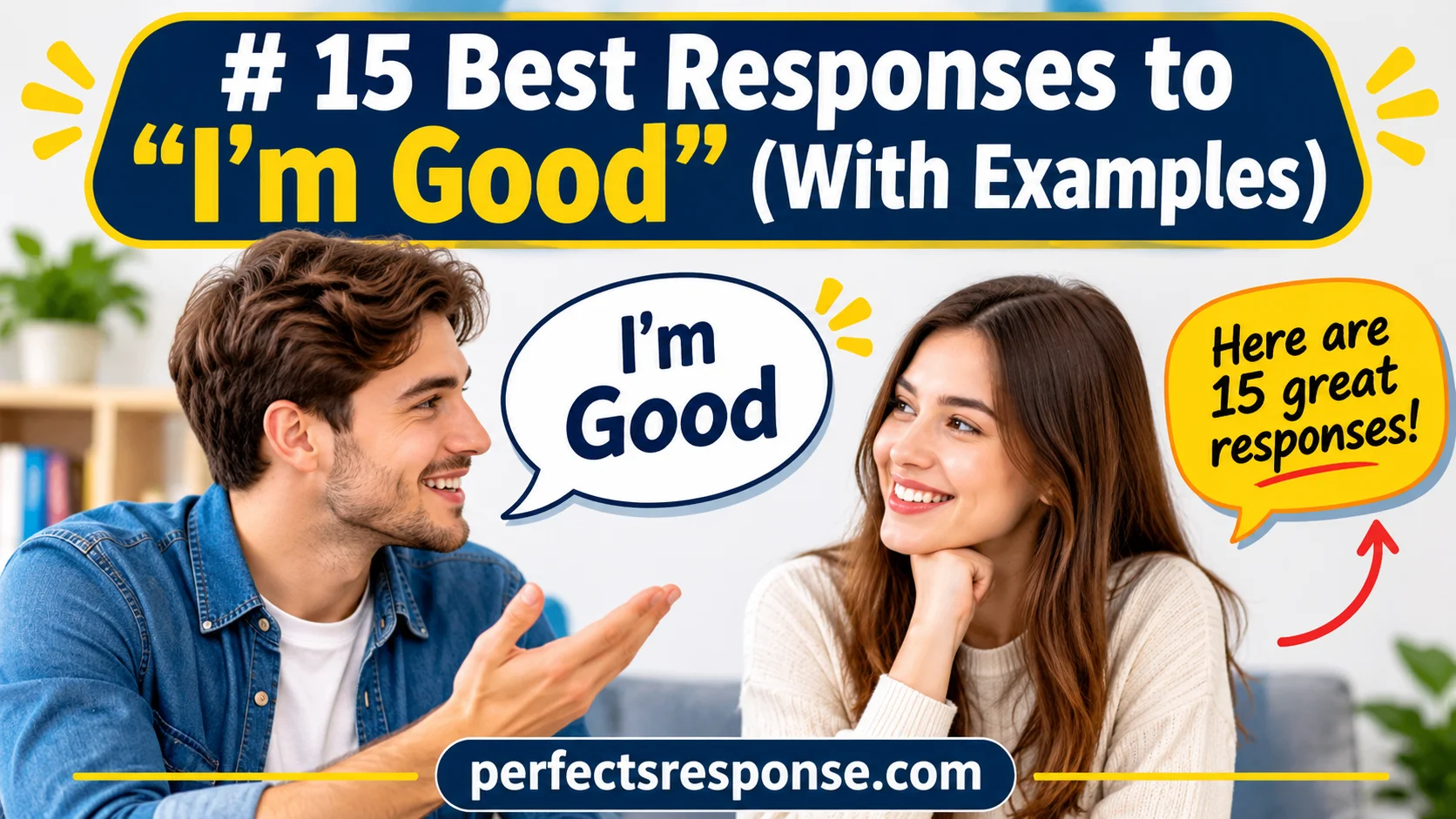
Finding the Best Responses to “I’m Good” can help you turn a simple greeting into an interesting and enjoyable conversation. Sometimes, when someone says they are good, you may struggle to find the right words to keep the discussion going. Whether you are talking to a friend, coworker, family member, or someone special, having a few natural replies ready can make communication easier. A thoughtful response can show interest, create a friendly atmosphere, and encourage the other person to share more about their day.
In this guide, you’ll discover different ways to respond to “I’m Good” in everyday conversations, text messages, and face-to-face interactions. From funny and witty replies to flirty, playful, casual, and polite responses, there is something for every mood and relationship. You’ll also find examples that help you understand when and how to use each response naturally. Choose the words that match your personality, keep the conversation flowing, and make even a simple exchange more engaging.
1. Glad to Hear That
When someone tells you they’re good, responding with “Glad to hear that” is a simple way to show that you appreciate their positive update. Imagine texting a friend after a busy week and asking how they’re doing. They reply, “I’m good, thanks for asking.” Instead of ending the conversation with another short answer, you can say, “Glad to hear that! How has your week been?” This response communicates genuine interest without putting pressure on the other person to share more than they want. It also works well when talking to family members, classmates, colleagues, or acquaintances. Sometimes, a little acknowledgment makes a conversation feel warmer. If you want to sound friendly, positive, and considerate, this is one of the easiest replies to use.
Meaning
“Glad to hear that” means you’re happy that the other person is doing well. It acknowledges their positive response.
Tone
Warm, friendly, positive, and polite. It communicates genuine happiness without sounding overly emotional.
Best Use
Use this response with friends, family members, coworkers, and acquaintances when someone shares that they’re doing well.
When to Use This Response
Choose this phrase when you want to acknowledge someone’s answer and show that you care about their well-being. It is especially useful when you want to keep a conversation comfortable and natural.
More Example Replies
- “That’s wonderful! I’m glad everything is going well.”
- “Good to know! Hope things keep getting better.”
- “Happy to hear that. Have a great day!”
Similar Responses
- “That’s great to hear!” – A slightly more enthusiastic alternative.
- “Happy to hear it!” – Short and friendly.
- “Good to know!” – Casual and straightforward.
2. That’s Great! How’s Your Day Going?
Sometimes, replying to “I’m good” with another question is the best way to prevent a conversation from ending too quickly. “That’s great! How’s your day going?” shows that you’re interested in more than just receiving a quick update. For example, imagine meeting a friend at a coffee shop. You ask how they’re doing, and they respond, “I’m good.” You can smile and say, “That’s great! How’s your day going?” This gives them an opportunity to talk about something interesting, whether it’s work, school, family, or their plans. The response also works in casual text conversations when you want to reconnect with someone. It’s particularly useful when you don’t have another topic ready but still want to make the interaction feel natural and welcoming.
Meaning
This phrase acknowledges that someone is doing well and invites them to share more about their day.
Tone
Friendly, interested, conversational, and welcoming. It makes the other person feel included in the conversation.
Best Use
Use it with friends, classmates, coworkers, neighbors, or someone you’re getting to know.
When to Use This Response
Choose this reply when you want to continue a conversation rather than simply acknowledge the person’s answer. It’s especially appropriate during casual greetings and everyday chats.
More Example Replies
- “Nice! Anything interesting happening today?”
- “That’s good! Have you had a busy day?”
- “Awesome! What have you been up to?”
Similar Responses
- “How’s everything going?” – A broader question about their life.
- “What are you up to today?” – More casual and direct.
- “How has your week been?” – Useful for longer catch-ups.
3. Good to Know! What Have You Been Up To?
If you haven’t spoken to someone for a while, “Good to know! What have you been up to?” is a great way to turn a simple greeting into a meaningful conversation. For example, imagine receiving a message from an old school friend. You ask how they’re doing, and they respond, “I’m good.” Instead of replying with just “Nice,” you can ask what they’ve been doing lately. This gives them room to talk about their hobbies, work, studies, travels, or personal experiences. It also shows that you’re interested in reconnecting rather than exchanging basic greetings. The phrase sounds relaxed and works particularly well with people you already know. It’s a useful response when you want to catch up without making the conversation feel forced or overly formal.
Meaning
“Good to know” acknowledges their positive update, while “What have you been up to?” invites them to share recent activities.
Tone
Casual, friendly, curious, and approachable. It creates an easy opportunity for a longer conversation.
Best Use
Use this response with old friends, relatives, former classmates, and people you haven’t contacted recently.
When to Use This Response
Choose it when your goal is to reconnect and learn what’s happening in someone’s life. It works particularly well after a period without communication.
More Example Replies
- “That’s good! Anything new happening in your life?”
- “Nice! How have things been going lately?”
- “Happy to hear that. Have you been keeping busy?”
Similar Responses
- “What’s new with you?” – Short and casual.
- “How have you been lately?” – More personal.
- “Anything exciting going on?” – Playful and engaging.
4. I’m Doing Good Too, Thanks for Asking!
When someone says “I’m good” and also asks how you’re doing, responding with “I’m doing good too, thanks for asking!” keeps the conversation balanced and polite. For example, your coworker might greet you in the morning and ask, “How are you?” You answer, “I’m good, how about you?” They reply, “I’m good too.” You can respond positively and continue discussing your day. This phrase is also useful in text messages when someone takes the time to ask about your well-being. It acknowledges their kindness while sharing a little information about yourself. You can adjust it depending on your mood, such as saying you’re doing great or having a busy day. The important thing is to keep the response natural and genuine.
Meaning
This phrase means you’re also doing well and appreciate the other person’s interest in your well-being.
Tone
Polite, friendly, appreciative, and conversational.
Best Use
Use it when someone asks about your well-being and shares that they’re doing well too.
When to Use This Response
Choose this reply during greetings, workplace conversations, family interactions, and friendly exchanges when you want to return the positive energy.
More Example Replies
- “I’m great too! Thanks for checking in.”
- “Doing pretty well myself. Hope your day is going nicely!”
- “I’m good as well. Appreciate you asking!”
Similar Responses
- “I’m doing great too!” – More enthusiastic.
- “Can’t complain, thanks!” – Relaxed and casual.
- “All good on my end!” – Informal and friendly.
5. That’s Wonderful! Anything Exciting Happening?
Sometimes, a simple response deserves a little enthusiasm, especially when you’re talking to someone you genuinely enjoy spending time with. “That’s wonderful! Anything exciting happening?” is a positive way to encourage the other person to share more. Imagine meeting a friend who recently started a new job. You ask how they’re doing, and they say, “I’m good.” You can respond with this question to discover whether something interesting has happened recently. It works well when you want to explore new topics without asking overly personal questions. You might learn about an upcoming trip, a new hobby, a successful project, or weekend plans. This response makes the conversation feel energetic and shows that you’re interested in hearing about the positive things happening in their life.
Meaning
It expresses happiness about the person’s well-being and asks whether something interesting is happening in their life.
Tone
Enthusiastic, cheerful, friendly, and curious.
Best Use
Use it with friends, family members, classmates, and people who enjoy sharing personal updates.
When to Use This Response
Choose this phrase when you want to move beyond basic greetings and encourage someone to talk about positive experiences or upcoming plans.
More Example Replies
- “That’s awesome! Got any exciting plans for the weekend?”
- “Love that! Anything new going on?”
- “Fantastic! Have you got something fun planned?”
Similar Responses
- “Anything new happening?” – Simple and casual.
- “What’s the good news?” – More playful.
- “What are you looking forward to?” – Encourages a more personal conversation.
6. Just Good? Not Great?
If you’re talking to a close friend who enjoys humor, “Just good? Not great?” can be a playful way to respond to “I’m good.” Imagine your friend sends a quick message saying they’re good after you ask about their day. Instead of giving a predictable answer, you can tease them lightly by asking whether they’re only good and not having an amazing day. This response adds personality to an ordinary conversation and may make the other person laugh. However, context matters. It’s best used with someone who understands your sense of humor. Avoid using it when someone seems upset, uncomfortable, or unwilling to talk. The goal is to make the conversation more entertaining, not to pressure someone into pretending they’re happier than they feel.
Meaning
This phrase playfully suggests that being good is nice, but being great would be even better.
Tone
Playful, humorous, teasing, and lighthearted.
Best Use
Use it with close friends, siblings, romantic partners, or people who appreciate friendly teasing.
When to Use This Response
Choose this reply when the conversation is relaxed and you want to add a little humor. Avoid it in serious or professional situations.
More Example Replies
- “Only good? I was expecting amazing!”
- “Come on, you can do better than good!”
- “Good is nice, but I hope you’re having a fantastic day!”
Similar Responses
- “Why only good?” – A playful follow-up.
- “Not amazing yet?” – Light teasing.
- “Let’s upgrade that to great!” – Cheerful and humorous.
7. That’s a Relief! I Was Hoping You Were Okay.
When you genuinely care about someone, your response to “I’m good” can communicate more than ordinary politeness. “That’s a relief! I was hoping you were okay” is a thoughtful way to show concern and affection. Imagine a close friend has been dealing with a stressful situation or hasn’t replied to your messages for a few days. When they finally tell you they’re good, you can use this response to express that you were thinking about them. It lets them know their well-being matters to you. This phrase is also appropriate when speaking with family members or someone going through a difficult period. However, use it only when there is a genuine reason for your concern. That makes your words sound sincere rather than unnecessarily dramatic.
Meaning
It means you’re relieved that the person is doing well because you were concerned about them.
Tone
Caring, sincere, emotional, and reassuring.
Best Use
Use it with close friends, family members, romantic partners, or someone who has recently experienced difficulties.
When to Use This Response
Choose this phrase when you have genuinely been worried about someone and their positive update makes you feel relieved.
More Example Replies
- “I’m happy you’re doing okay. I’ve been thinking about you.”
- “That’s reassuring. I hope things continue improving.”
- “Good to hear! I was a little concerned.”
Similar Responses
- “I’m glad you’re okay.” – Direct and caring.
- “That’s reassuring to hear.” – Slightly more formal.
- “I’ve been hoping things were going well.” – Thoughtful and sincere.
8. Nice! What’s Been the Best Part of Your Day?
A person saying “I’m good” doesn’t always mean the conversation needs to stop. Sometimes, asking a more interesting question helps both people enjoy the interaction. “Nice! What’s been the best part of your day?” encourages the other person to think about something positive. For example, imagine chatting with a friend after work. They tell you they’re good, and you ask this question. They might mention finishing an important project, meeting someone special, enjoying lunch, or finally having time to relax. It’s a refreshing alternative to repeatedly asking, “How are you?” because it creates an opportunity for a specific story. You can use it in face-to-face conversations or messages. It works especially well when you want a friendly conversation with a little more substance.
Meaning
The phrase acknowledges that someone is doing well and invites them to share the most enjoyable part of their day.
Tone
Positive, curious, friendly, and engaging.
Best Use
Use it with friends, partners, family members, and colleagues during relaxed conversations.
When to Use This Response
Choose this question when you want to make a conversation more interesting and encourage someone to share a positive experience.
More Example Replies
- “That’s great! What made today special?”
- “Awesome! Did anything fun happen?”
- “Happy to hear that! What was the highlight of your day?”
Similar Responses
- “What made you smile today?” – More thoughtful.
- “How’s your day treating you?” – Relaxed and conversational.
- “What was the highlight?” – Short and engaging.
Read This: 15 Best Responses to “Rain Check” (With Examples)
9. Good! I’ve Been Meaning to Catch Up With You.
When someone you haven’t spoken to recently says “I’m good,” you can use the opportunity to reconnect. “Good! I’ve been meaning to catch up with you” communicates that you value the relationship and would enjoy having a longer conversation. For example, imagine seeing an old colleague at a social event. After exchanging greetings, they tell you they’re good. You can respond with this phrase and ask about their recent experiences. It sounds natural because it gives the conversation a clear direction. You could discuss work, family, mutual friends, or future plans. This response is also useful in text messages when you want to restart communication without sending a complicated opening message. It makes your interest clear while keeping the interaction warm and comfortable.
Meaning
It means you’re happy they’re doing well and would like to spend time talking or reconnecting with them.
Tone
Warm, friendly, sincere, and welcoming.
Best Use
Use it with old friends, former coworkers, relatives, and acquaintances you haven’t spoken to in a while.
When to Use This Response
Choose this phrase when you want to turn a brief greeting into an opportunity to reconnect and have a meaningful conversation.
More Example Replies
- “That’s good! We really need to catch up sometime.”
- “Happy to hear that. It’s been too long!”
- “Great! Let’s find some time to talk soon.”
Similar Responses
- “It’s been a while!” – Casual and familiar.
- “We should catch up soon.” – Suggests future communication.
- “I’ve missed our conversations.” – More personal and affectionate.
10. Better Than Yesterday, Hopefully Even Better Tomorrow!
If you enjoy positive thinking and motivational conversations, “Better than yesterday, hopefully even better tomorrow!” is a cheerful response to “I’m good.” It communicates that you’re happy with the present while looking forward to better experiences. Imagine a friend who has been working hard toward a personal goal. You ask how they’re doing, and they say they’re good. You can respond with this phrase to encourage an optimistic outlook. It also works when someone is gradually improving after a stressful week or challenging experience. The response feels more personal than simply saying “That’s nice.” It reminds people that every day doesn’t need to be perfect to be meaningful. Use it when you want to bring a little encouragement and positivity into an everyday conversation.
Meaning
This phrase expresses satisfaction with the present and hope that tomorrow will bring even better experiences.
Tone
Optimistic, encouraging, cheerful, and motivational.
Best Use
Use it with friends, family members, colleagues, or people who appreciate positive and encouraging conversations.
When to Use This Response
Choose it when you want to share an optimistic attitude and remind someone that improvement can happen gradually.
More Example Replies
- “That’s the spirit! Tomorrow could be even better.”
- “One good day at a time. Keep going!”
- “Love that attitude! Here’s to an even better week.”
Similar Responses
- “Every day is a new opportunity.” – Motivational.
- “Glad things are looking up.” – Reassuring.
- “Onward and upward!” – Short and enthusiastic.
11. I’m Happy You’re Doing Well. You Deserve It!
Sometimes, the best response is one that makes the other person feel appreciated. “I’m happy you’re doing well. You deserve it!” is particularly meaningful when someone has recently overcome a challenge or worked hard to improve their circumstances. For example, imagine a friend who has spent several months dealing with a demanding job or personal responsibilities. When you ask how they’re doing, they reply, “I’m good.” You can use this response to acknowledge their positive situation and remind them that they deserve happiness. It feels more heartfelt than a basic greeting because it communicates encouragement and kindness. This phrase also works in conversations with a romantic partner or family member. Just make sure your words match the relationship and the situation.
Meaning
It means you’re genuinely happy that someone is doing well and believe they deserve positive experiences.
Tone
Affectionate, supportive, sincere, and encouraging.
Best Use
Use it with close friends, family members, romantic partners, or someone who has recently achieved something meaningful.
When to Use This Response
Choose this phrase when you want to celebrate someone’s happiness or recognize the effort they’ve made to reach a better place in life.
More Example Replies
- “You deserve all the good things coming your way!”
- “That’s amazing. I’m genuinely happy for you.”
- “So glad to hear that. Keep enjoying the good moments!”
Similar Responses
- “I’m so happy for you!” – More enthusiastic.
- “You deserve the best!” – Warm and supportive.
- “That’s wonderful news!” – Positive and appreciative.
12. Just Checking! How’s Everything Going Overall?
Sometimes, “I’m good” is a quick answer that doesn’t reveal much about what someone is experiencing. If you want to show interest without being intrusive, “Just checking! How’s everything going overall?” is a thoughtful follow-up. Imagine a friend who has recently started a new job or moved to another city. You ask how they’re doing, and they say they’re good. You can gently ask how everything is going overall. This gives them the opportunity to discuss their experiences without feeling pressured to share private details. It also works when checking on a relative or colleague you haven’t contacted recently. The key is to ask naturally and listen to their answer. If they prefer to keep things brief, respect that and move the conversation forward.
Meaning
This phrase means you’re interested in how things are going in the person’s life beyond their immediate response.
Tone
Thoughtful, caring, polite, and conversational.
Best Use
Use it with friends, relatives, coworkers, and people experiencing changes in their personal or professional lives.
When to Use This Response
Choose this reply when you want to check in with someone and give them an opportunity to share more about their overall situation.
More Example Replies
- “Good to hear! How’s work and everything else?”
- “That’s nice. Is everything going smoothly lately?”
- “Glad you’re good! How are things at home?”
Similar Responses
- “How’s everything on your end?” – Casual and friendly.
- “How have things been lately?” – General and natural.
- “Is everything going smoothly?” – Slightly more specific.
13. That’s Awesome! Keep That Positive Energy Going.
A positive response can make even a short conversation more enjoyable. “That’s awesome! Keep that positive energy going” is a cheerful way to acknowledge someone’s good mood. Imagine meeting a classmate who seems excited and tells you they’re doing well. You can respond with this phrase to match their energy and encourage them to maintain their positive attitude. It’s also useful in conversations with friends who have recently completed a goal, started a new routine, or found something they enjoy. Unlike a simple “Glad to hear that,” this response adds encouragement and enthusiasm. However, it’s best suited to situations where the other person genuinely seems happy. If someone is only giving a polite answer, a simpler response may feel more natural.
Meaning
It means you’re happy that someone is doing well and encourage them to maintain their positive attitude.
Tone
Enthusiastic, upbeat, encouraging, and friendly.
Best Use
Use it with friends, classmates, teammates, and colleagues during positive and informal conversations.
When to Use This Response
Choose this phrase when someone sounds happy or confident and you want to reinforce their good mood with an encouraging comment.
More Example Replies
- “Love hearing that! Keep smiling.”
- “Amazing! Hope the good vibes continue.”
- “That’s the energy we need! Stay positive.”
Similar Responses
- “Keep up the good vibes!” – Casual and energetic.
- “Stay awesome!” – Short and playful.
- “Keep shining!” – Encouraging and warm.
14. That’s Good. Let Me Know If You Need Anything.
When someone says “I’m good,” sometimes they simply want to let you know that everything is fine. However, if you know they’re dealing with a busy schedule or difficult responsibilities, offering support can make your response more meaningful. “That’s good. Let me know if you need anything” is a considerate way to show that you’re available without being pushy. For example, imagine a coworker has been managing several demanding projects. You check on them, and they say they’re good. You can respond with this phrase to acknowledge their answer while leaving the door open for assistance. It also works with friends and relatives who might appreciate knowing they can reach out. The response communicates kindness, respect, and a willingness to help when needed.
Meaning
It means you’re glad the person is doing well and are willing to offer help if they need it later.
Tone
Supportive, considerate, polite, and reassuring.
Best Use
Use it with friends, family members, coworkers, neighbors, or anyone who might appreciate a little support.
When to Use This Response
Choose this phrase when you want to show availability without demanding personal details or making someone feel obligated to accept your help.
More Example Replies
- “Glad to hear that! I’m here if you need a hand.”
- “That’s good. Don’t hesitate to reach out.”
- “Happy you’re doing okay. Let me know if anything changes.”
Similar Responses
- “I’m here if you need me.” – More personal and reassuring.
- “Happy to help anytime.” – Friendly and supportive.
- “Don’t hesitate to ask.” – Polite and practical.
15. Good to Hear! So, What’s Next for You?
If you want to move a conversation toward future plans, “Good to hear! So, what’s next for you?” is an excellent response. It acknowledges that the other person is doing well and gives them an opportunity to discuss what they’re looking forward to. For example, imagine talking to a friend who has recently completed an important examination. You ask how they’re doing, and they say, “I’m good.” You can respond with this question to learn about their next goals, upcoming plans, or personal ambitions. It also works when catching up with someone who has recently changed jobs or finished a major project. The phrase is especially useful because it shifts the conversation from a basic greeting to something more engaging. Just make sure the question suits the situation and doesn’t sound like an interview.
Meaning
It means you’re happy that someone is doing well and interested in knowing about their future plans or next steps.
Tone
Curious, friendly, encouraging, and forward-looking.
Best Use
Use it with friends, classmates, colleagues, and people discussing new opportunities or recent achievements.
When to Use This Response
Choose this question when you want to learn about someone’s upcoming plans and encourage a conversation about their goals or interests.
More Example Replies
- “That’s great! Got any plans for the coming weeks?”
- “Nice! What’s the next big thing you’re working on?”
- “Happy to hear that. Anything exciting coming up?”
Similar Responses
- “What’s coming up for you?” – Casual and open-ended.
- “What are your plans?” – Direct and simple.
- “What’s your next goal?” – More focused on personal ambitions.
FAQs:
1. What is the best response to “I’m good”?
The best response is something friendly and natural, such as “Glad to hear that! How’s your day going?” It shows interest and gives the other person a reason to continue the conversation.
2. How do you respond to “I’m good” in a text?
You can reply with “That’s great! What are you up to?” or “Happy to hear that!” These responses are simple, friendly, and work well in everyday text messages.
3. What is a funny response to “I’m good”?
A funny response could be “Good? That’s suspiciously positive!” or “Keep that energy going!” These playful replies add humor and make the conversation more enjoyable.
4. How do you respond to “I’m good” from your crush?
If your crush says they are good, try a sweet or flirty response like “I’m glad you’re good, but I bet I could make your day even better.” It adds a little charm without making things awkward.
5. How do you respond to “I’m good” professionally?
In a professional conversation, keep your response polite and respectful. You can say “Glad to hear that. I hope your day is going well!” or “That’s good to hear. How can I help you today?”
Conclusion:
Knowing the best responses to “I’m good” can make everyday conversations more interesting and enjoyable. Instead of giving a boring reply or letting the discussion end, you can use funny, friendly, flirty, casual, or polite responses to keep things moving naturally. The right words depend on who you’re talking to and the situation you’re in. Whether you’re texting a friend, chatting with your crush, or speaking with a coworker, choose a response that feels genuine and matches your personality. With these responses to “I’m good,” you’ll always have a suitable way to keep the conversation flowing and build better connections.

Maya Rose is an English-language writer passionate about storytelling, personal growth, and everyday life. Her writing combines simplicity, warmth, and thoughtful perspectives that connect with readers.







1 thought on “15 Best Responses to “I’m Good” (With Examples)”