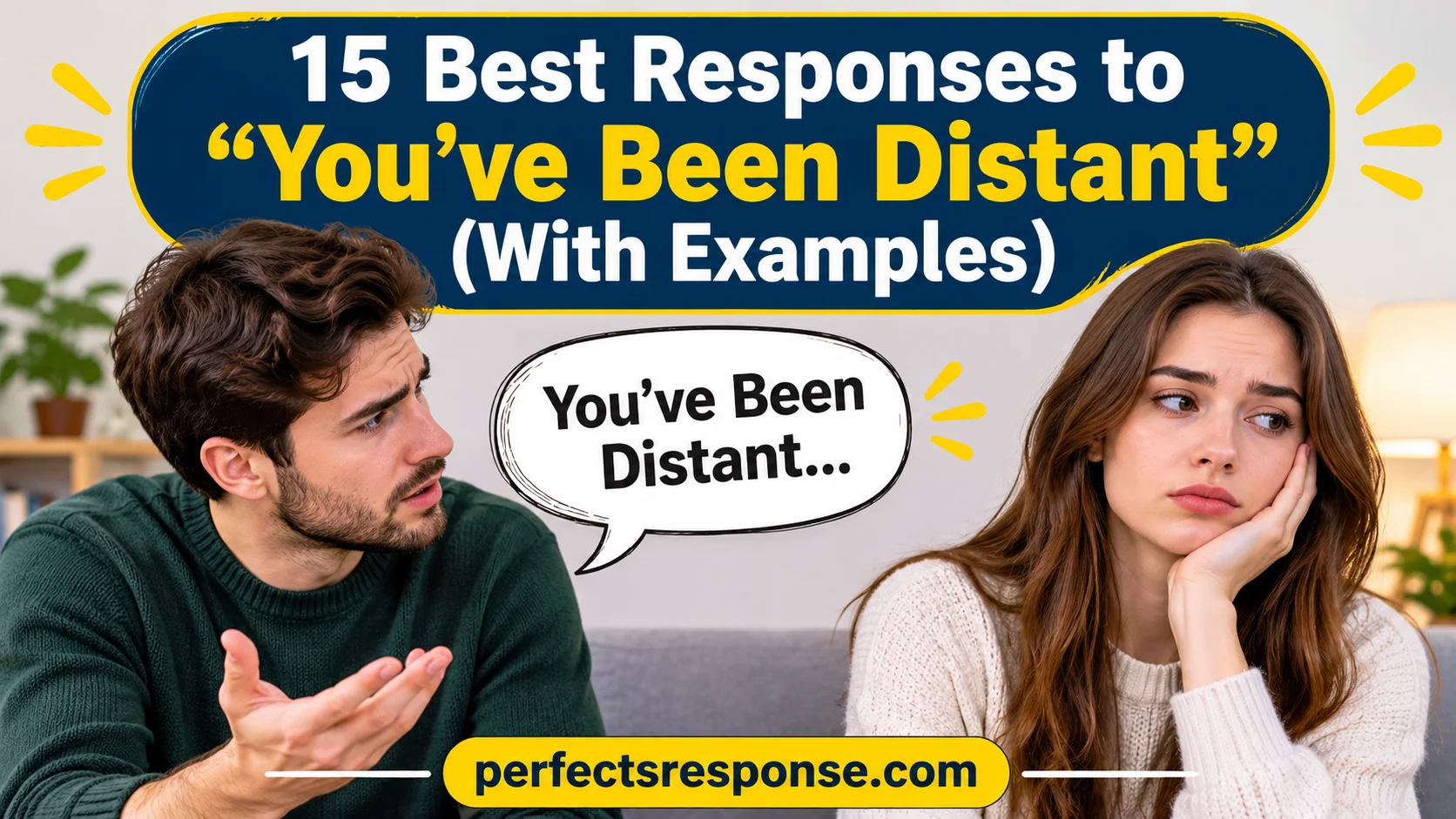
Finding the Best Responses to “You’ve Been Distant” can help you handle an uncomfortable conversation with honesty, kindness, and confidence. When someone notices you’ve been pulling away, your words can make a big difference. Whether it’s a friend, crush, or partner, choosing the right response helps you express your feelings without creating unnecessary misunderstandings or hurting the relationship.
Sometimes, you may need a friendly, emotional, funny, direct, or reassuring reply, depending on the situation. You might be dealing with personal struggles, needing some space, or simply feeling disconnected. The right words can help explain your feelings, rebuild trust, improve communication, and reconnect with someone who genuinely cares. These thoughtful responses and realistic examples will help you find the perfect way to express yourself naturally.
1. “I’m Sorry If It Seemed That Way. I’ve Had a Lot on My Mind.”
This is one of the most considerate responses when someone notices you’ve been less communicative than usual. It acknowledges their feelings without making the conversation unnecessarily serious. Imagine a close friend asking why you haven’t been checking in or responding to messages as frequently. Instead of becoming defensive, you can use this response to explain that your attention has been elsewhere. It communicates that your behavior wasn’t necessarily intentional and that you haven’t forgotten about the relationship. You can make the response even more meaningful by briefly explaining what’s been occupying your thoughts. A little reassurance can help prevent misunderstandings and show the other person that their feelings matter to you.
Meaning
This response means you recognize that your behavior may have created emotional distance, but you’ve been distracted by personal thoughts or responsibilities.
Tone
Apologetic, gentle, thoughtful, and reassuring. It acknowledges the other person’s feelings without sounding overly dramatic.
Best Use
Use this response with friends, romantic partners, family members, or anyone whose feelings you genuinely care about.
When to Use This Response
Choose this reply when you’ve been mentally occupied, stressed, or overwhelmed and haven’t communicated as regularly as before. It’s particularly useful when you want to acknowledge the situation without immediately getting into every personal detail.
More Example Replies
- “I’m sorry I’ve been quiet lately. I’ve just had a lot going on mentally.”
- “I didn’t mean to make you feel that way. My mind has been somewhere else recently.”
- “You’re right, I’ve been a little withdrawn. I’ve been trying to sort through a few things.”
Similar Responses
- “I’ve been dealing with a lot lately.”
- “It’s been a mentally exhausting few weeks.”
- “I haven’t been myself recently.”
2. “I’ve Just Been Busy With Life Lately.”
Sometimes, distance has nothing to do with how you feel about someone. Work deadlines, family responsibilities, personal commitments, and everyday challenges can take up more time than expected. If someone tells you that you’ve been distant, this response offers a simple explanation without making the conversation uncomfortable. For example, imagine an old friend asking why you haven’t been available for weekend plans. You can explain that life has been particularly busy without suggesting that the friendship has become less important. However, if you value the relationship, consider following up with something like, “I’d still love to catch up soon.” This makes your response feel warmer and shows that you’re interested in staying connected.
Meaning
It means you’ve been occupied with everyday responsibilities and haven’t had as much time or energy for communication.
Tone
Casual, friendly, honest, and straightforward. It keeps the conversation relaxed.
Best Use
This works well with friends, colleagues, relatives, and acquaintances who understand that life can get busy.
When to Use This Response
Use it when your distance is genuinely caused by a packed schedule, work responsibilities, or personal commitments rather than a problem with the relationship.
More Example Replies
- “Things have been pretty hectic lately, but I’m doing okay.”
- “I’ve had so much going on that I haven’t had much time to catch up.”
- “Life has been keeping me occupied, but I haven’t forgotten about you.”
Similar Responses
- “I’ve been caught up with work lately.”
- “It’s been a busy season for me.”
- “I’ve had a lot of responsibilities to manage.”
3. “I Didn’t Realize You Felt That Way. Is Everything Okay Between Us?”
When someone says you’ve been distant, they might be looking for reassurance rather than an explanation. This response is helpful because it turns the conversation into an opportunity to understand their feelings. Instead of assuming what they mean, you’re inviting them to explain what they’ve noticed. For instance, your partner might mention that you’ve stopped sharing details about your day or initiating conversations. Asking whether everything is okay gives them room to express their concerns. It also shows emotional maturity because you’re willing to listen instead of immediately defending yourself. This response is especially valuable when you care about maintaining the relationship but aren’t sure what caused the perceived distance.
Meaning
You’re acknowledging that the other person feels disconnected and asking whether something has changed between you.
Tone
Caring, curious, open-minded, and emotionally attentive.
Best Use
Use it with romantic partners, close friends, family members, or anyone with whom you want to maintain an honest relationship.
When to Use This Response
Choose this reply when you’re unsure why someone feels you’ve become distant and want to understand whether there’s an underlying misunderstanding or unresolved issue.
More Example Replies
- “I didn’t know you were feeling that. Have I done something to upset you?”
- “I hadn’t noticed, but I want to understand. Is something bothering you?”
- “Are we okay? I don’t want there to be any misunderstandings between us.”
Similar Responses
- “Have you noticed something different between us?”
- “Did something happen that made you feel this way?”
- “I want to understand what’s bothering you.”
4. “I’ve Been Going Through Some Personal Things.”
Not every difficult period needs to be explained in detail. Sometimes, you may be dealing with family problems, emotional challenges, financial pressure, or personal decisions that you’re not ready to discuss. This response helps you communicate that something is happening without revealing information you’re uncomfortable sharing. Imagine a friend asking why you’ve stopped joining group conversations. You can explain that you’ve been handling personal matters and haven’t had much energy for socializing. The important thing is that you’re offering an honest explanation while maintaining your privacy. If you feel comfortable, you can also reassure the person that your distance isn’t necessarily a reflection of how you feel about them.
Meaning
It means you’ve been dealing with private matters that have affected your communication or availability.
Tone
Honest, reserved, respectful, and slightly emotional.
Best Use
This response is suitable for friends, family members, romantic partners, and coworkers when you want to explain your behavior without sharing personal details.
When to Use This Response
Use it when personal challenges are affecting your ability to communicate and you aren’t ready to discuss the details. It helps establish that your silence has a reason.
More Example Replies
- “I’ve had some personal things to work through, so I’ve been keeping to myself.”
- “There’s been a lot happening privately, and I haven’t felt very social.”
- “I’m dealing with a few things right now. I appreciate you understanding.”
Similar Responses
- “I’ve been handling some personal matters.”
- “I’ve needed some time to myself.”
- “Things have been a little complicated recently.”
5. “I Know, and I’m Sorry. I Haven’t Been Giving You Much Attention.”
Sometimes, the best response is simply to take responsibility. If you’ve genuinely neglected someone or stopped making an effort, acknowledging it can be more meaningful than offering excuses. This response works particularly well when the other person has repeatedly tried to connect with you. For example, your partner may have noticed that you’re no longer making time for meaningful conversations or planning activities together. Admitting that you haven’t been giving them enough attention demonstrates awareness and accountability. However, the apology should be followed by a genuine effort to improve. You might suggest spending quality time together or making more time for regular conversations. A sincere apology becomes more meaningful when your actions support your words.
Meaning
You’re admitting that you’ve been emotionally or physically unavailable and recognizing that the other person may have felt neglected.
Tone
Sincere, apologetic, responsible, and caring.
Best Use
This response is especially appropriate for romantic relationships, close friendships, and family relationships where your lack of attention has affected someone.
When to Use This Response
Choose it when you recognize that you’ve contributed to the distance and want to take responsibility rather than shift the blame.
More Example Replies
- “You’re right. I haven’t been making enough time for us, and I’m sorry.”
- “I know I’ve been distracted. You deserve more of my attention.”
- “I’ve been neglecting our conversations lately, and I want to do better.”
Similar Responses
- “I haven’t been as present as I should be.”
- “I know I could have made more effort.”
- “I’m sorry I haven’t been showing up lately.”
6. “I’ve Needed Some Time to Focus on Myself.”
There are times when stepping back from conversations and social activities is necessary for your personal well-being. You might be working toward a goal, rebuilding your confidence, developing healthier routines, or simply trying to understand what you want from life. When someone says you’ve been distant, this response communicates that your attention has been directed inward. For example, a friend might notice that you’ve stopped attending regular outings or spending as much time online. You can explain that you’ve been prioritizing yourself without making them feel unimportant. If the relationship matters, adding a little reassurance can make your answer warmer. It shows that personal space and meaningful relationships can exist together without either one being neglected.
Meaning
It means you’ve intentionally reduced some social interactions to concentrate on your personal growth, priorities, or well-being.
Tone
Calm, confident, reflective, and respectful.
Best Use
This works well with friends, family members, romantic partners, and acquaintances who may have noticed a change in your social habits.
When to Use This Response
Use it when you’re intentionally creating more time for yourself and want to explain that your distance is about personal priorities rather than a lack of care.
More Example Replies
- “I’ve been focusing on my goals and trying to get myself back on track.”
- “I’ve needed a little space to work on myself lately.”
- “I’ve been prioritizing my personal growth and taking things slowly.”
Similar Responses
- “I’ve been working on myself recently.”
- “I’ve needed some personal space.”
- “I’ve been focusing on my own priorities.”
7. “I Didn’t Mean to Make You Feel Left Out.”
Sometimes, people interpret reduced communication as rejection. You may not realize that you’ve stopped including someone in your plans, replying as frequently, or sharing updates about your life. This response is useful because it recognizes the emotional effect your behavior may have had. Imagine a close friend telling you that you’ve become distant since making new friends or starting a different routine. Rather than arguing about whether you’ve actually changed, you can acknowledge how they feel. You can then explain that excluding them was never your intention. If appropriate, invite them to spend time together or catch up. This response helps rebuild connection because it focuses on reassurance instead of blame.
Meaning
It means you didn’t intentionally exclude or ignore the other person and recognize that your behavior may have made them feel unimportant.
Tone
Warm, apologetic, reassuring, and considerate.
Best Use
Use this response with close friends, family members, romantic partners, or people who may feel overlooked.
When to Use This Response
Choose it when someone feels excluded because you’ve been less available, haven’t invited them to activities, or haven’t communicated as much.
More Example Replies
- “I never wanted you to feel like I was leaving you out.”
- “It’s not that I don’t want you around. I’ve just been caught up in other things.”
- “I’m sorry if my actions made you feel unimportant. That wasn’t my intention.”
Similar Responses
- “I didn’t mean to shut you out.”
- “You’re still important to me.”
- “I never intended to make you feel forgotten.”
8. “I’ve Been Feeling a Little Overwhelmed, Honestly.”
Emotional exhaustion can make even simple conversations feel difficult. When you’re overwhelmed, you might respond less often, cancel plans, or prefer spending time alone. If someone notices and tells you that you’ve been distant, this response gives them a genuine explanation without pretending everything is fine. For example, imagine a friend asking why you’ve become unusually quiet during your regular conversations. You can admit that you’ve been dealing with more than you can comfortably manage. This can encourage a more understanding conversation and help the other person recognize that your behavior isn’t necessarily personal. If you’re comfortable, you can explain what kind of support would help, whether that’s patience, encouragement, or simply some breathing room.
Meaning
You’re explaining that stress, emotional pressure, or too many responsibilities have affected your ability to stay connected.
Tone
Vulnerable, sincere, honest, and emotionally open.
Best Use
This is suitable for trusted friends, romantic partners, family members, and people who have shown genuine concern for you.
When to Use This Response
Use it when you’re mentally or emotionally overwhelmed and want someone to understand why you’ve become quieter or less available.
More Example Replies
- “I’ve honestly been dealing with a lot, and it’s been difficult to keep up with everything.”
- “My mind has been overloaded lately, so I’ve been a little withdrawn.”
- “I’ve been under quite a bit of pressure, and I haven’t had much energy to socialize.”
Similar Responses
- “I’ve been emotionally drained.”
- “I’ve had a stressful couple of weeks.”
- “I’ve been trying to manage a lot at once.”
Read This: 15 Best Responses to “You’re Too Sensitive” (With Examples)
9. “I Guess We Haven’t Been Connecting Like We Used To.”
Sometimes, the distance between two people develops gradually. Neither person necessarily does anything wrong, but conversations become shorter, plans happen less frequently, and the relationship starts feeling different. This response is useful because it recognizes that the change may involve both people rather than placing all the responsibility on yourself. For example, you might say this to a longtime friend when you realize that both of you have become less involved in each other’s lives. It opens the door to an honest discussion about what has changed and whether both people want to rebuild the connection. Instead of treating distance as an accusation, you’re approaching it as something worth understanding together.
Meaning
It means you’ve noticed a change in the relationship and feel that the connection isn’t as strong or consistent as it once was.
Tone
Reflective, honest, neutral, and slightly emotional.
Best Use
Use it with long-term friends, romantic partners, or relatives when communication has gradually decreased on both sides.
When to Use This Response
Choose this reply when you believe the distance is mutual and want to discuss the relationship without making the other person feel blamed.
More Example Replies
- “I feel like we’ve both been caught up in our own lives lately.”
- “Things haven’t felt quite the same between us recently.”
- “Maybe we’ve both gotten a little comfortable with not checking in.”
Similar Responses
- “We’ve both been a little disconnected.”
- “I miss how close we used to be.”
- “I think we’ve lost touch a little.”
10. “I’m Still Here. I’ve Just Been Quiet.”
Not everyone expresses affection through frequent messages or constant conversations. Some people naturally become quieter when they’re busy, tired, or focused on other things. If someone tells you that you’ve been distant, this response offers simple reassurance without turning the exchange into a lengthy explanation. Imagine a close friend texting you after noticing that you haven’t been as active in the friendship. You can remind them that your communication habits may have changed temporarily, but your feelings haven’t disappeared. It’s a particularly useful response when you want to preserve the connection while keeping the conversation light. You can make it even more personal by adding, “How have you been?” or suggesting a time to catch up.
Meaning
It means you’re still available and interested in maintaining the relationship, even though you’ve been communicating less.
Tone
Warm, reassuring, relaxed, and affectionate.
Best Use
This response works well with close friends, romantic partners, siblings, and people who understand your communication style.
When to Use This Response
Use it when you haven’t been communicating frequently but want to reassure someone that you’re still present and value the relationship.
More Example Replies
- “I’ve been quiet, but that doesn’t mean I’ve disappeared.”
- “I’m still around. I’ve just had a lot to think about.”
- “I may not be talking as much, but I still care about you.”
Similar Responses
- “I’ve just been keeping a low profile.”
- “I’m here, just taking things slowly.”
- “I haven’t gone anywhere.”
11. “Is There Something I’ve Done That Made You Feel This Way?”
When someone tells you that you’ve been distant, it’s possible they’ve noticed something specific that you haven’t considered. Maybe a conversation ended badly, you stopped making plans, or your responses became noticeably shorter after a disagreement. Asking this question shows that you’re willing to listen and understand their perspective. For instance, your partner might have noticed that you’ve been less affectionate since a recent argument. Rather than assuming the problem is insignificant, asking whether something happened gives them an opportunity to explain. This response is especially helpful when you want to resolve misunderstandings before they become bigger problems. The key is to ask sincerely and remain open to their answer.
Meaning
You’re asking whether a particular action, disagreement, or change in behavior has made the other person feel disconnected.
Tone
Open-minded, concerned, respectful, and understanding.
Best Use
Use it with romantic partners, close friends, family members, or anyone with whom you want to maintain honest communication.
When to Use This Response
Choose this reply when you’re unsure whether your distance has been caused by an unresolved issue or something you unintentionally did.
More Example Replies
- “Did I say or do something that upset you?”
- “I want to understand. Has something changed between us?”
- “Have I been acting differently toward you without realizing it?”
Similar Responses
- “Did something happen that I missed?”
- “Have I made you feel ignored?”
- “Is there something we need to talk about?”
12. “I’ve Been Trying to Figure Things Out, and I Needed Space.”
Sometimes, taking a step back is a conscious decision rather than an accidental result of being busy. You may be reconsidering your priorities, thinking about a relationship, or trying to make an important personal decision. This response communicates that you needed time and distance to process your thoughts. For example, after a difficult conversation with your partner, you might need a few days to understand your feelings before discussing the situation again. Explaining this can help the other person understand that your silence wasn’t necessarily meant to punish or reject them. However, if you’ve intentionally created distance, it’s important to communicate your intentions clearly rather than leaving someone uncertain about where they stand.
Meaning
It means you’ve stepped back from regular communication because you needed time to think, reflect, or make sense of a situation.
Tone
Thoughtful, serious, honest, and composed.
Best Use
This works particularly well in romantic relationships, emotionally complicated friendships, and situations involving difficult personal decisions.
When to Use This Response
Use it when you’ve deliberately taken some space to process your emotions or understand what you want before continuing a conversation.
More Example Replies
- “I’ve needed some time to clear my head and understand what I’m feeling.”
- “I’ve been thinking about a few things and didn’t want to rush any conversations.”
- “I needed a little distance to figure out what was going on in my head.”
Similar Responses
- “I’ve been doing some reflecting.”
- “I needed time to process everything.”
- “I’ve been trying to get some clarity.”
13. “I Didn’t Realize I Was Coming Across That Way. I’ll Try to Be More Present.”
Sometimes, you genuinely don’t notice changes in your behavior until someone points them out. You might think you’re communicating normally while the other person feels ignored or disconnected. This response acknowledges their observation and demonstrates a willingness to improve. For example, a romantic partner might explain that you’ve been spending more time on your phone than having meaningful conversations. Instead of dismissing the concern, you can admit that you hadn’t recognized the effect of your behavior. The phrase “I’ll try to be more present” communicates an intention to make a change. It’s important, however, to follow through with realistic actions, such as listening more attentively, making time for conversations, or putting away distractions.
Meaning
You’re acknowledging that your behavior may have created distance and expressing a willingness to become more attentive.
Tone
Accountable, considerate, sincere, and positive.
Best Use
This response is appropriate for romantic partners, close friends, family members, and professional relationships where communication and attention matter.
When to Use This Response
Choose it when someone identifies a change in your behavior that you hadn’t noticed and you genuinely want to make an effort to improve.
More Example Replies
- “I didn’t notice I was doing that, but I’ll make more of an effort.”
- “Thanks for telling me. I don’t want you to feel like I’m ignoring you.”
- “I can see how I’ve been distracted. I’ll work on being more attentive.”
Similar Responses
- “I’ll make more time for us.”
- “I want to be more involved.”
- “I’ll try to communicate better.”
14. “I Think I’ve Just Been Protecting My Peace.”
Not every period of distance is a problem that needs to be fixed. Sometimes, you’ve reduced communication because certain situations have become emotionally exhausting or you’ve realized that you need stronger boundaries. This response communicates that you’re prioritizing your peace and personal well-being. For example, someone might ask why you’ve stopped participating in conversations that regularly turn into arguments or unnecessary drama. You can explain that you’ve been choosing a quieter environment and focusing on what feels healthy for you. However, this phrase can sound dismissive if the other person is genuinely concerned about your relationship. It’s best used when you want to communicate a personal boundary without being disrespectful. If the person matters to you, explain that needing space doesn’t automatically mean you want to end the connection.
Meaning
It means you’ve intentionally reduced certain interactions to protect your emotional energy, maintain boundaries, or avoid unnecessary stress.
Tone
Confident, calm, independent, and boundary-conscious.
Best Use
Use it when speaking with friends, acquaintances, or people who may not fully understand your need for personal boundaries.
When to Use This Response
Choose this response when your distance is intentional and connected to maintaining a healthier emotional environment. Avoid using it as a substitute for an honest explanation when someone deserves clarity about the relationship.
More Example Replies
- “I’ve been choosing peace over unnecessary stress lately.”
- “I’ve needed to distance myself from things that drain my energy.”
- “I’ve been keeping my circle and my mind a little quieter.”
Similar Responses
- “I’ve been setting healthier boundaries.”
- “I’ve been prioritizing my mental space.”
- “I’ve been avoiding unnecessary drama.”
15. “I Miss Talking to You Too. Let’s Catch Up Soon.”
Sometimes, the best response isn’t another explanation but an opportunity to reconnect. If someone says you’ve been distant, they may simply miss spending time with you. This response acknowledges that feeling while showing that you also value the relationship. Imagine an old friend messaging you, saying they haven’t heard from you in weeks. Instead of giving a lengthy explanation about your schedule, you can tell them that you miss your conversations too and suggest making plans. It’s a warm way to move beyond the problem and focus on rebuilding the connection. However, make sure your suggestion is genuine. If you say you’ll catch up soon, try to follow through by arranging a call, meeting, or meaningful conversation.
Meaning
It means you recognize the lack of communication and want to reconnect because you miss the other person’s presence.
Tone
Affectionate, friendly, positive, and reassuring.
Best Use
This is particularly suitable for close friends, romantic partners, siblings, and people you haven’t spent much time with recently.
When to Use This Response
Use it when you genuinely miss the person and want to turn the conversation into an opportunity to rebuild your connection.
More Example Replies
- “I’ve missed our conversations. We should definitely talk more.”
- “I know it’s been a while. I’d love to spend some time together.”
- “I’ve been meaning to reach out. Let’s plan something this week.”
Similar Responses
- “We should catch up properly.”
- “I’ve missed having you around.”
- “Let’s make some time for each other.”
FAQs:
1. What is the best response to “You’ve been distant”?
The best response is an honest and reassuring one, such as, “I’ve had a lot on my mind lately, but it doesn’t mean I don’t care about you.” This helps explain your behavior without making the other person feel ignored.
2. How do you respond when someone says you’ve changed?
You can say, “I’ve been going through some things, and I guess I’ve changed a little. I’m still figuring things out.” This response sounds natural and shows that you’re comfortable acknowledging personal growth.
3. What should you say when you need space from someone?
You can politely say, “I just need a little time for myself to clear my head. It’s nothing personal, and I hope you understand.” This communicates your boundaries while showing respect for the other person’s feelings.
4. How do you respond to “Why are you ignoring me?”
A thoughtful response could be, “I’m not ignoring you. I’ve just been caught up with life lately, and I haven’t been as available as usual.” It clears up the misunderstanding without sounding defensive.
5. How do you reconnect with someone after being distant?
Start with a sincere message like, “I know I’ve been distant lately, and I’m sorry if that made you feel unimportant. I’d really like us to catch up.” A little honesty and effort can help rebuild trust and strengthen your connection.
Conclusion:
Finding the right response to “You’ve Been Distant” doesn’t have to be difficult. Whether you want to sound friendly, funny, emotional, direct, or reassuring, choose words that genuinely reflect how you feel. Sometimes, being distant happens because of personal struggles, stress, or simply needing time for yourself. What matters most is communicating honestly and respecting the other person’s feelings. Use these responses and examples to handle awkward conversations, clear up misunderstandings, and rebuild meaningful connections. Remember, honest communication and a little understanding can make a big difference in any relationship.

Maya Rose is an English-language writer passionate about storytelling, personal growth, and everyday life. Her writing combines simplicity, warmth, and thoughtful perspectives that connect with readers.










1 thought on “15 Best Responses to “You’ve Been Distant” (With Examples)”