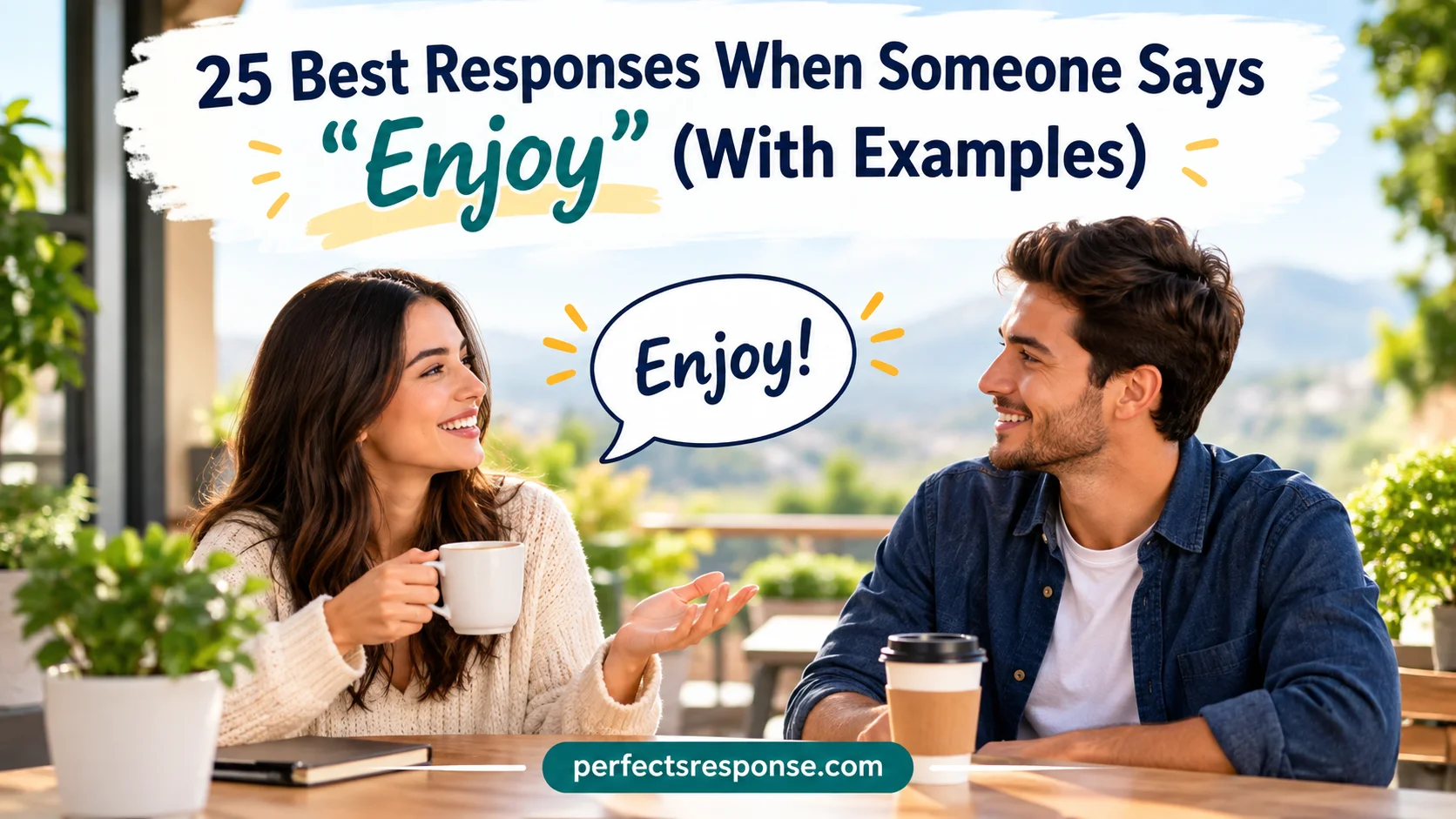
Finding the Best Responses When Someone Says “Enjoy” (With Examples) can make everyday conversations feel more natural, friendly, and confident. Whether someone says it before your meal, movie, trip, or evening plans, the right response depends on the situation, relationship, and tone.
Sometimes a simple “Thank you” is perfect, while other moments call for something warmer, playful, or more personal. Knowing how to respond to “Enjoy” helps you match the other person’s warmth without sounding awkward or forced. These examples can help you reply naturally in texts, casual conversations, professional situations, and friendly send-offs.
1. Thank You!
A simple “Thank you!” is often the easiest and most natural response when someone says “Enjoy.” For example, if a restaurant employee says “Enjoy” as they hand you your food, you don’t need to create a long response. A friendly “Thank you!” is polite and completely appropriate. The same answer works when a coworker wishes you enjoyment before your lunch break, vacation, movie, or weekend activity. It shows that you appreciate their friendly gesture without making the conversation unnecessarily complicated. Because it is short and universally understood, this response is a reliable choice when you want to sound polite, confident, and natural.
Meaning
“Thank you!” shows that you appreciate the person’s good wishes.
Tone
Polite, friendly, simple, and natural.
Example
“Enjoy your dinner!” — “Thank you!”
Best Use
Use it in restaurants, workplaces, stores, social situations, and everyday conversations.
2. Thanks, I Will!
“Thanks, I will!” sounds a little more enthusiastic than simply saying “Thank you.” It confirms that you intend to enjoy whatever you’re about to do. Imagine telling a friend that you’re going to a concert and they respond, “Enjoy!” Saying “Thanks, I will!” feels warm and conversational. It also works when a family member wishes you a good time before a trip or when a coworker says “Enjoy your lunch.” This response is especially useful when you want to acknowledge the person while keeping the exchange quick. It has a positive energy without sounding overly formal.
Meaning
It means you appreciate their wish and intend to enjoy yourself.
Tone
Casual, positive, and friendly.
Example
“Enjoy the concert!” — “Thanks, I will!”
Best Use
Best for friends, family, coworkers, and casual conversations.
3. I Appreciate It!
“I appreciate it!” is a slightly more thoughtful way to respond when someone says “Enjoy.” It communicates gratitude while sounding mature and sincere. You might use it when someone takes a moment to wish you well before a vacation, dinner, celebration, or special event. It can also work in professional conversations because it isn’t overly casual. For example, if your manager says, “Enjoy your weekend,” you could respond, “I appreciate it!” The phrase shows that you recognize the kindness behind their words. It’s particularly useful when you want your response to sound grateful without becoming too formal or emotional.
Meaning
It means you’re genuinely grateful for the person’s kind wishes.
Tone
Warm, appreciative, and slightly polished.
Example
“Enjoy your vacation!” — “I appreciate it!”
Best Use
Use it in professional, polite, or meaningful everyday conversations.
4. Thanks, I’m Looking Forward to It!
Sometimes “Enjoy” comes before something you’re genuinely excited about. In that situation, “Thanks, I’m looking forward to it!” adds personality to your response. Instead of simply acknowledging the wish, you tell the other person that you’re already excited about what’s coming. This works especially well before vacations, dinners, concerts, holidays, trips, celebrations, or special events. It gives the conversation a more engaging feel because it shares a little of your enthusiasm. If a friend says, “Enjoy your trip!” this response naturally communicates both gratitude and excitement.
Meaning
You’re thanking them and expressing excitement about the upcoming experience.
Tone
Enthusiastic, friendly, and positive.
Example
“Enjoy your trip!” — “Thanks, I’m looking forward to it!”
Best Use
Best for travel, events, vacations, celebrations, and plans you’re excited about.
5. Absolutely, I Will!
“Absolutely, I will!” gives your response a confident and cheerful tone. It works when someone says “Enjoy” and you want to sound enthusiastic rather than giving a routine answer. For example, a friend might say, “Enjoy the movie!” and you could reply, “Absolutely, I will!” The word “absolutely” adds energy and makes the response feel more expressive. It’s still easygoing, so you don’t have to worry about sounding too formal. This phrase is particularly useful when the person’s comment feels encouraging and you want to respond with equal positivity.
Meaning
You’re strongly agreeing that you’ll enjoy the experience.
Tone
Confident, cheerful, and enthusiastic.
Example
“Enjoy your evening!” — “Absolutely, I will!”
Best Use
Use it in friendly and upbeat conversations.
6. Thanks, You Too!
“Thanks, you too!” is a natural response when the other person can also enjoy something similar. For example, if a coworker says, “Enjoy your weekend!” you can easily reply, “Thanks, you too!” It returns the good wish instead of simply accepting it. However, it doesn’t fit every situation. If someone says “Enjoy your birthday dinner” when they aren’t attending, saying “you too” may sound strange. The key is to consider whether the same wish reasonably applies to them. When it does, this short response creates a friendly and reciprocal exchange.
Meaning
You’re thanking them and returning the same good wish.
Tone
Friendly, casual, and reciprocal.
Example
“Enjoy your weekend!” — “Thanks, you too!”
Best Use
Best when both people have a similar opportunity to enjoy something.
7. I Sure Will!
“I sure will!” is an easygoing alternative to “Thanks, I will.” It sounds natural when you’re speaking with someone casually and want to show confidence that you’ll have a good time. A friend might say, “Enjoy the game!” and you could respond, “I sure will!” The phrase is short but has more personality than a basic “Thanks.” It works especially well in spoken conversations because it feels spontaneous rather than rehearsed. If you prefer responses that sound relaxed and conversational, this is a useful phrase to keep in your vocabulary.
Meaning
You’re confidently saying that you intend to enjoy yourself.
Tone
Relaxed, cheerful, and conversational.
Example
“Enjoy the game!” — “I sure will!”
Best Use
Use it with friends, family, neighbors, and familiar coworkers.
8. Thanks, I’ll Try My Best!
“Thanks, I’ll try my best!” adds a playful tone to the conversation. Technically, enjoying something isn’t usually a difficult task, which is why this response can sound humorous and lighthearted. For example, if someone says “Enjoy all that food!” you might smile and say, “Thanks, I’ll try my best!” It can make an ordinary interaction more memorable. The phrase works best when the relationship is comfortable enough for a little humor. In formal situations, however, a simpler response such as “Thank you” may be more appropriate.
Meaning
You’re accepting the wish while adding a playful or humorous touch.
Tone
Playful, lighthearted, and friendly.
Example
“Enjoy that huge dessert!” — “Thanks, I’ll try my best!”
Best Use
Best for casual conversations and humorous situations.
9. That’s the Plan!
“That’s the plan!” is a confident and slightly playful response to “Enjoy.” It suggests that having a good time is exactly what you intended to do. Imagine telling a friend you’re heading to the beach and they say, “Enjoy!” Your response could be, “That’s the plan!” It creates a relaxed conversational rhythm and can even invite a smile. Unlike “Thank you,” it focuses less on gratitude and more on agreeing with the idea of enjoying yourself. It’s a great choice when you want your reply to sound natural, confident, and a little more expressive.
Meaning
You’re saying that enjoying yourself is exactly what you intend to do.
Tone
Confident, casual, and playful.
Example
“Enjoy your day off!” — “That’s the plan!”
Best Use
Use it in casual conversations with friends, family, or familiar colleagues.
10. Thanks for Saying That!
“Thanks for saying that!” is a warm response when you want to acknowledge not just the words but the kindness behind them. It can work particularly well when someone wishes you enjoyment before something meaningful, such as a vacation, celebration, or important personal event. Rather than sounding automatic, this response shows that you noticed their thoughtfulness. It’s also flexible enough for many social situations. If you want to sound appreciative without using a very formal phrase, this is a strong middle ground. It communicates gratitude while keeping the conversation friendly and personal.
Meaning
You appreciate that the person took the time to wish you well.
Tone
Warm, sincere, and appreciative.
Example
“Enjoy your special day!” — “Thanks for saying that!”
Best Use
Best for thoughtful social interactions and personal conversations.
11. I Definitely Will!
“I definitely will!” is a more energetic version of “I will.” It shows that you’re confident you’re going to enjoy the experience. This response works well when the activity is something you’re already excited about. If someone says, “Enjoy your vacation!” you could say, “I definitely will!” It sounds positive without being excessive. The word “definitely” gives the sentence extra enthusiasm, making it useful when you want your response to feel more lively. It’s simple enough for everyday use and can fit both spoken conversations and text messages.
Meaning
You’re strongly confirming that you’ll enjoy the experience.
Tone
Positive, confident, and enthusiastic.
Example
“Enjoy your vacation!” — “I definitely will!”
Best Use
Use it when you’re genuinely excited about your plans.
Also Read This: 25 Best Responses to “Everyone Is a Little Autistic” (With Examples)
12. Thanks, I’m Excited!
If you’re genuinely looking forward to what you’re about to do, “Thanks, I’m excited!” makes your response more personal. It lets the other person know that their good wishes match how you already feel. This response works naturally before concerts, vacations, parties, trips, special dinners, holidays, or other anticipated experiences. It also helps keep conversations going because the other person may respond by asking what you’re most excited about. Compared with a simple “Thank you,” this phrase gives the conversation more emotional warmth while remaining short and easy to say.
Meaning
You’re thanking them and sharing your excitement about the upcoming experience.
Tone
Enthusiastic, warm, and genuine.
Example
“Enjoy the festival!” — “Thanks, I’m excited!”
Best Use
Best for events, travel, celebrations, and exciting plans.
13. I’m Sure I Will—Thanks!
“I’m sure I will—thanks!” combines confidence and gratitude in one natural sentence. It works particularly well when someone wishes you enjoyment before an activity you already expect to like. For instance, if someone says, “Enjoy your dinner,” you can respond, “I’m sure I will—thanks!” The phrase sounds conversational rather than scripted, making it useful in everyday interactions. It also avoids sounding too enthusiastic when a simple acknowledgment is enough. If you want something slightly more expressive than “Thank you,” but not as energetic as “Absolutely, I will,” this is a balanced option.
Meaning
You’re confident you’ll enjoy yourself and appreciate their kind wish.
Tone
Natural, warm, and confident.
Example
“Enjoy the show!” — “I’m sure I will—thanks!”
Best Use
Use it for everyday social and casual conversations.
14. Thanks, I’ll Have a Great Time!
“Thanks, I’ll have a great time!” directly connects the person’s wish with your expectation of enjoying yourself. It’s especially appropriate when someone is wishing you well before a social event or outing. For example, a friend might tell you, “Enjoy the party!” and you could respond with this phrase. It sounds upbeat without being overly dramatic. The response also works well in text messages because it feels complete and friendly. If you want to make it clear that you’re looking forward to having fun, this is an excellent choice.
Meaning
You’re thanking them and expressing confidence that you’ll enjoy the experience.
Tone
Positive, friendly, and enthusiastic.
Example
“Enjoy the party!” — “Thanks, I’ll have a great time!”
Best Use
Best for parties, outings, trips, dinners, and social events.
15. I’ll Enjoy Every Minute!
“I’ll enjoy every minute!” is a more expressive response that communicates genuine excitement. It works particularly well when the upcoming experience is special or meaningful, such as a vacation, concert, celebration, or long-awaited break. Instead of simply accepting the other person’s wish, you emphasize that you intend to make the most of the experience. This phrase can also sound affectionate when used with friends or family. Because it is more enthusiastic than “Thank you,” it’s best when the situation actually gives you something worth being excited about.
Meaning
You’re saying that you intend to fully appreciate the experience.
Tone
Warm, enthusiastic, and expressive.
Example
“Enjoy your holiday!” — “I’ll enjoy every minute!”
Best Use
Use it for special occasions, vacations, celebrations, and memorable experiences.
16. Thanks, I’m Going to Have Fun!
“Thanks, I’m going to have fun!” is a relaxed and straightforward way to respond when you’re looking forward to an enjoyable activity. It works especially well with friends because the language is casual and energetic. If someone says, “Enjoy the concert!” you can respond naturally with this phrase. It tells them you appreciate the comment while also sharing your positive expectations. The wording is simple, which makes it suitable for spoken English and text messages alike. It’s a good choice when you want your reply to feel friendly rather than formal.
Meaning
You’re thanking the person and saying you expect to have an enjoyable time.
Tone
Casual, upbeat, and friendly.
Example
“Enjoy the concert!” — “Thanks, I’m going to have fun!”
Best Use
Best for friends, family, parties, concerts, games, and outings.
17. You Bet, Thanks!
“You bet, thanks!” has a casual and confident feel. It can be a fun alternative to standard responses when talking with someone you know well. For example, if a friend says, “Enjoy your weekend!” you might reply, “You bet, thanks!” It acknowledges their good wish without sounding overly formal. The expression is particularly natural in relaxed American English conversations. Because “you bet” is informal, it’s better suited to friendly situations than serious professional communication. If your goal is to sound easygoing and conversational, this response can work very well.
Meaning
It means something like “Absolutely” or “Sure,” while also expressing thanks.
Tone
Casual, confident, and relaxed.
Example
“Enjoy your weekend!” — “You bet, thanks!”
Best Use
Use it with friends and people you’re comfortable speaking casually with.
18. Thanks, I’ll Make the Most of It!
“Thanks, I’ll make the most of it!” communicates gratitude while showing that you intend to appreciate the opportunity. It works particularly well for vacations, days off, special events, or experiences you don’t get often. For example, if a coworker says, “Enjoy your long weekend,” this response sounds positive and thoughtful. It suggests that you’re not simply going to passively experience the time—you plan to use it well. The phrase can also sound motivational, making it useful when someone is encouraging you to enjoy a valuable opportunity.
Meaning
You’re saying you’ll appreciate and fully enjoy the opportunity.
Tone
Positive, thoughtful, and optimistic.
Example
“Enjoy your day off!” — “Thanks, I’ll make the most of it!”
Best Use
Best for vacations, breaks, opportunities, and special occasions.
19. I Will, Thanks for the Kind Words!
“I will, thanks for the kind words!” gives an ordinary “Enjoy” a more appreciative response. It works when you want to recognize that the other person is being thoughtful. This can be useful when someone wishes you well before an important event or personal occasion. The phrase sounds warmer than simply saying “Thanks,” but it still remains easy to understand. Because “kind words” can sound slightly more formal, you can use it with acquaintances, coworkers, or people you want to address respectfully. It’s a good choice when you want your gratitude to feel sincere.
Meaning
You appreciate their kind wishes and confirm that you’ll enjoy yourself.
Tone
Sincere, respectful, and warm.
Example
“Enjoy your celebration!” — “I will, thanks for the kind words!”
Best Use
Use it in polite, respectful, or meaningful conversations.
20. Thanks! I Hope You’re Having a Great Day Too!
When someone says “Enjoy,” you can sometimes turn the exchange into a broader friendly conversation. “Thanks! I hope you’re having a great day too!” does exactly that. Rather than ending the interaction immediately, you return a positive wish and show interest in the other person. This works especially well with coworkers, acquaintances, customer-service interactions, or friendly everyday conversations. It’s a little longer than a basic “Thank you,” but it remains natural. If you want to sound warm and considerate, this response creates a pleasant conversational impression.
Meaning
You appreciate their wish and return a positive wish for their day.
Tone
Friendly, considerate, and warm.
Example
“Enjoy your lunch!” — “Thanks! I hope you’re having a great day too!”
Best Use
Best for coworkers, acquaintances, service interactions, and polite conversations.
21. Thank You, That Means a Lot!
“Thank you, that means a lot!” is best when the person’s words feel particularly thoughtful. Although “Enjoy” is often casual, the surrounding situation can make it more meaningful. For example, someone might wish you enjoyment before a long-awaited vacation or a special celebration. Responding with this phrase shows that you genuinely value their kindness. It shouldn’t be used for every routine interaction because it may sound more emotional than necessary. But when the person’s support or good wishes matter to you, it can communicate sincere appreciation in a natural way.
Meaning
You’re saying their kind wish genuinely matters to you.
Tone
Sincere, heartfelt, and appreciative.
Example
“Enjoy your special trip!” — “Thank you, that means a lot!”
Best Use
Use it for meaningful moments and heartfelt conversations.
22. Thanks, I’ll Keep That in Mind!
“Thanks, I’ll keep that in mind!” can work when “Enjoy” is part of a broader suggestion or reminder. For example, someone might tell you, “Enjoy the festival, and make sure you try the local food.” In that context, this response acknowledges both the encouragement and the advice. On its own, “Enjoy” doesn’t always require this reply, so context matters. It’s best when the speaker has given you something useful to remember. The phrase sounds polite and attentive, showing that you’re listening rather than simply giving an automatic response.
Meaning
You’re thanking them and indicating that you’ll remember their suggestion or encouragement.
Tone
Polite, attentive, and conversational.
Example
“Enjoy the trip, and take plenty of photos!” — “Thanks, I’ll keep that in mind!”
Best Use
Best when “Enjoy” comes with advice, suggestions, or reminders.
23. I Plan To—Thanks!
“I plan to—thanks!” is short, natural, and slightly playful. It suggests that enjoying yourself is already part of your plans. For example, if a friend says, “Enjoy your weekend!” you might answer, “I plan to—thanks!” It’s a little more distinctive than “Thanks, I will,” while still being easy to understand. This phrase is particularly useful when you want a response that feels confident but not overly enthusiastic. It also works nicely in text messages because it’s concise and conversational.
Meaning
You’re saying that enjoying yourself is already part of your plans.
Tone
Casual, confident, and friendly.
Example
“Enjoy your weekend!” — “I plan to—thanks!”
Best Use
Use it for weekends, vacations, outings, breaks, and casual plans.
24. Thanks! I’ll Tell You How It Goes!
“Thanks! I’ll tell you how it goes!” is a great response when the upcoming experience is something the other person may genuinely want to hear about later. Maybe you’re trying a new restaurant, attending an event, traveling somewhere, or watching a movie they’re interested in. This response acknowledges their “Enjoy” while naturally creating an opportunity for a future conversation. It’s especially useful between friends or coworkers who share interests. Instead of ending the conversation with a simple “Thanks,” you give the interaction a little more personality and connection.
Meaning
You appreciate their wish and offer to share your experience afterward.
Tone
Friendly, engaging, and conversational.
Example
“Enjoy the new restaurant!” — “Thanks! I’ll tell you how it goes!”
Best Use
Best when the other person may be interested in your experience afterward.
25. Thanks, I’ll Enjoy It!
“Thanks, I’ll enjoy it!” is a direct and natural response that closely matches the meaning of “Enjoy.” It works in many situations, from meals and movies to vacations and events. If someone says, “Enjoy your dinner,” you can simply say, “Thanks, I’ll enjoy it!” It’s slightly more complete than “Thank you” while remaining easygoing. This makes it a useful option when you want to acknowledge the person’s words directly. Because the phrase is simple and flexible, it can work in both casual conversations and polite everyday interactions.
Meaning
You’re thanking the person and confirming that you intend to enjoy the experience.
Tone
Friendly, positive, and natural.
Example
“Enjoy your dinner!” — “Thanks, I’ll enjoy it!”
Best Use
Use it for meals, movies, trips, events, activities, and everyday situations.
FAQs :
1. What is the best response when someone says “Enjoy”?
A simple “Thank you!” is usually the best response. You can also say “Thanks, I will!” or “I appreciate it!” depending on the situation.
2. What can I say instead of “Thank you” when someone says “Enjoy”?
You can respond with “I definitely will,” “Thanks, I’m looking forward to it,” or “That’s the plan!” These options sound natural and friendly.
3. How do I respond to “Enjoy” in a casual conversation?
For a casual conversation, keep your response relaxed. Try “Thanks!”, “I will!”, “You bet!”, or “Thanks, I’m sure I will.”
4. How should I respond when someone says “Enjoy” professionally?
In a professional setting, a polite response such as “Thank you, I appreciate that” or “Thanks, I certainly will” works well. Keep your tone respectful and simple.
5. Can I respond humorously when someone says “Enjoy”?
Yes, if you know the person well and the situation is appropriate. A playful reply like “Oh, I plan to!” or “I’ll do my best!” can add a little humor while keeping the conversation friendly.
Conclusion :
Knowing how to respond when someone says “Enjoy” can make small conversations feel more comfortable and genuine. While “Thank you” is always a safe choice, you can choose a warmer, funnier, or more personal response based on the situation. The key is to match their tone, stay natural, and avoid overthinking your reply. Whether you’re enjoying a meal, watching a movie, traveling, or ending a conversation, the right words can leave a positive impression.

Ruby Hart is a passionate writer who creates engaging, relatable, and easy-to-understand content. She loves turning everyday ideas into helpful and enjoyable stories for readers.










1 thought on “25 Best Responses When Someone Says “Enjoy” (With Examples)”